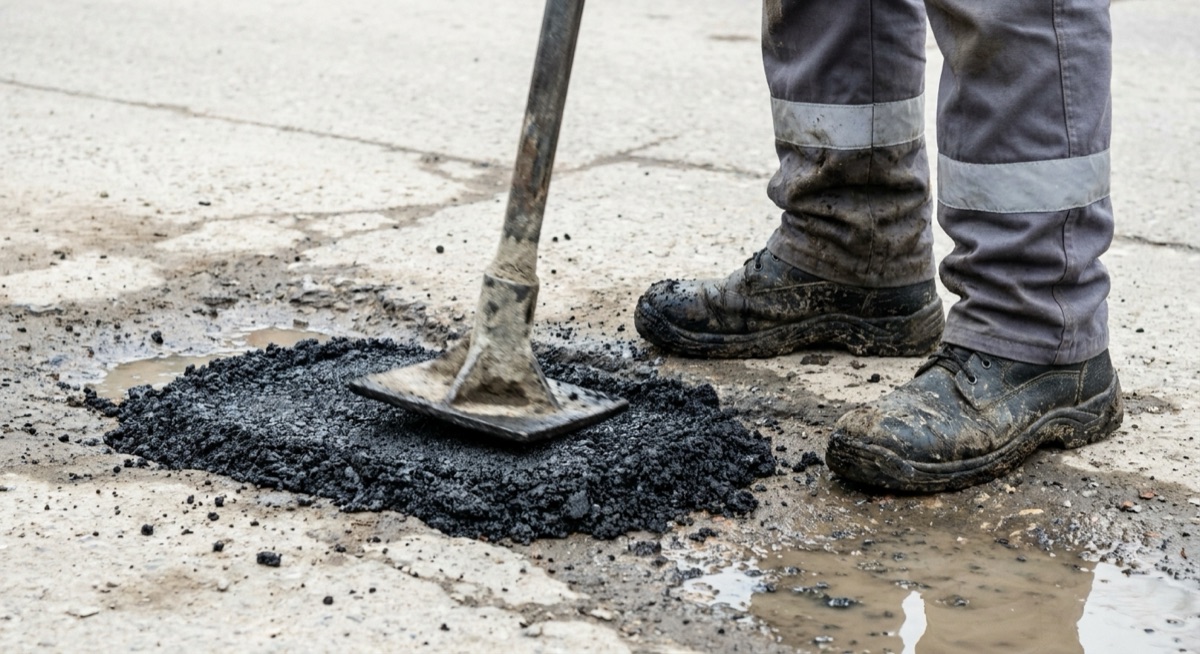
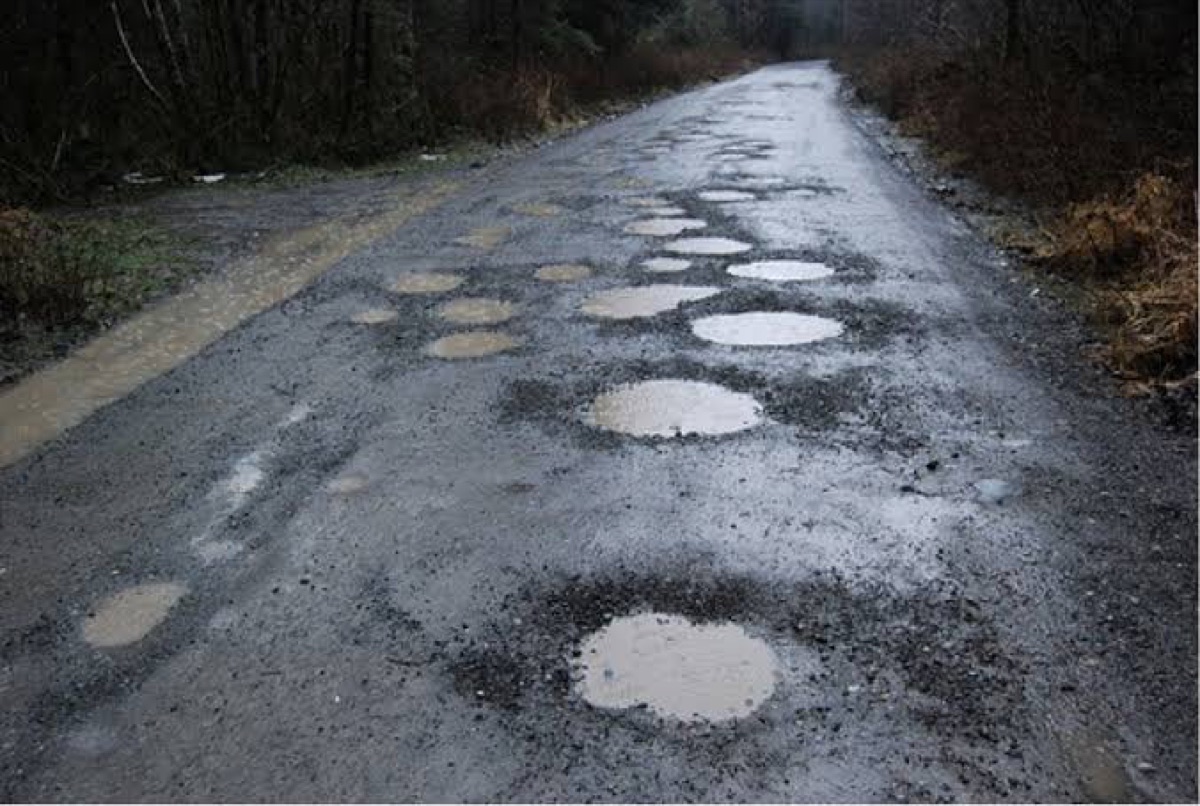
Leesburg Asphalt repairs potholes in driveways and parking lots throughout Loudoun County, VA using hot-mix asphalt SM-9.5A patching — not cold-pour bagged patching compound that washes out after the first rainstorm. We offer full-depth saw-cut square patch repair for permanent results, and throw-and-roll patching for rapid response on commercial lots with multiple potholes. Our pothole repair service covers driveway potholes, parking lot potholes, and pothole clusters caused by base failure.
Pothole repair in Leesburg typically costs $150–$800 per pothole for standard saw-cut square patch repair, depending on size and depth. Same-week scheduling available throughout Loudoun County. Emergency patching for hazardous potholes available within 24 hours.
Free estimates.
Leesburg Asphalt repairs potholes throughout Loudoun County, VA using hot-mix SM-9.5A asphalt and proper saw-cut square prep — not bagged cold-pour that fails in the next freeze cycle.
The most durable pothole repair method. The pothole area is squared off using a concrete saw, creating clean vertical edges that prevent the patch from raveling. The full depth of failed material is removed, including aggregate base if compromised.
Base is rebuilt with VDOT 21A material and compacted. SS-1h tack coat is applied to the vertical walls and base. SM-9.5A hot-mix is placed in lifts not exceeding 3" per lift and compacted with a plate compactor.
Expected life: 5–10+ years with proper surface maintenance.
For parking lots with multiple potholes needing rapid response — clearing hazardous conditions quickly — throw-and-roll is a professional temporary-to-permanent repair method. Hot-mix asphalt is placed into the pothole, overfilled 10–15%, and compacted by rolling the truck over the patch. No saw-cut, no tack coat.
Properly executed throw-and-roll with hot-mix (not cold-pour) performs much better than it sounds — these patches often last 2–3 seasons with traffic. Best for commercial lots where multiple potholes need same-day closure.
When potholes are deep (6"+ from surface to bottom) and surrounded by alligator cracking, the failure is in the aggregate base, not just the surface layer. Surface-level patching without addressing the base failure just produces another pothole in the same spot within months. We excavate to firm subgrade, compact with a jumping-jack tamper, rebuild the VDOT 21A base to proper thickness (8"–12" for driveways), apply tack coat, and patch with SM-9.5A hot-mix in compacted lifts.
This is a true permanent repair.
Water main breaks, gas line repairs, and other utility work under driveways and parking lots create settlement potholes as the backfill material compacts under traffic over 6–18 months. These trenches need proper patching that accounts for the settlement — overfill the patch slightly, compact aggressively, and expect one minor touch-up after the backfill fully settles. We coordinate with utility contractors for timing — patching too soon after a utility repair leads to premature settlement.
Not every depression needs the same repair. These signs help identify when a pothole requires professional attention — and which repair method is appropriate for your situation.
Loudoun County's pothole season runs February through April — immediately after the freeze-thaw window that creates them. Each freeze-thaw cycle lifts the asphalt skin over a weakened base area; repeated cycles eventually cause the surface to collapse under traffic. If you've noticed new depressions or holes appearing after January and February, spring is the time to repair them before they grow through the rest of the year's traffic cycle.
Waiting until fall means a larger repair scope and more vehicle damage in the meantime.
A pothole with crumbling, soft, or loose edges is actively growing — every vehicle that passes over it breaks off more material from the perimeter. The visual sign is jagged, irregular edges rather than a clean boundary. Left unrepaired, a pothole that loses 2–3 inches of perimeter material per month doubles in area within one season.
This is the strongest signal that repair is urgent, not optional. The saw-cut square patch method stops the perimeter loss by creating a clean bonded edge.
If the asphalt around a pothole feels soft or deflects slightly underfoot, the base failure extends well beyond the visible hole. This is the most important indicator for determining repair scope — the saw-cut repair area must capture the full extent of soft base, not just the visible opening. Patching a visible pothole without capturing the surrounding soft base area produces a patch that fails within months, because the base failure adjacent to the patch continues to progress until the new patch has nothing solid to bond to.
Potholes surrounded by alligator cracking — the interconnected web crack pattern — indicate that the base failure is widespread in that zone. Isolated pothole patching in an alligator-cracked area produces a patch island that holds while the rest of the zone continues to deteriorate around it. In this situation, the entire alligator-cracked zone should be cut out, the base rebuilt, and hot-patched as a single section — not hole-by-hole.
Call Leesburg Asphalt for an assessment if you're seeing potholes and alligator cracking in the same area.
A pothole that has damaged a vehicle or is deep enough to create a trip hazard (greater than 1/2" height differential at the edge) represents immediate liability for commercial property owners and HOA managers. Virginia property owners can be held liable for injuries and vehicle damage resulting from unaddressed pavement hazards that they knew or should have known existed. For commercial properties and HOAs, same-week or emergency same-day pothole repair eliminates the liability exposure at a cost that is a fraction of a single injury claim.
A pothole that has been patched before and returned in the same location is telling you that the underlying cause — base failure, drainage problem, or utility trench settlement — was not addressed with the previous patch. The third time a pothole returns in the same spot, surface patching is throwing money away. Leesburg Asphalt diagnoses the root cause at the assessment visit: if it's a drainage issue, we correct the grade; if it's base failure, we excavate to stable ground and rebuild.
Identifying the root cause is what separates a permanent repair from a temporary one.
We inspect each pothole for size, depth, surrounding condition, and whether the failure is surface-only or base-deep. Any pothole with a spongy or soft area larger than the visible hole indicates base failure — the repair area needs to be expanded to capture the full failing zone. Pothole depth is measured with a probe rod.
Assessment takes 5–10 minutes per pothole. We confirm repair method with you before starting work.
For permanent saw-cut patch repair: a concrete saw creates clean square cuts around the pothole at least 6" beyond the visible edge. The failed material is excavated to firm base — typically 4"–8" deep for surface potholes, 10"–14" for base failures. This takes 30–60 minutes per pothole.
For throw-and-roll method, this step is skipped — the pothole is cleaned of loose material only.
When base material is compromised, fresh VDOT 21A aggregate base is placed and compacted with a jumping-jack tamper. SS-1h tack coat is applied to the vertical walls of the saw-cut area and the prepared base surface. The tack coat breaks (becomes tacky) in 10–20 minutes before hot-mix placement.
Properly tacked edges are the difference between a patch that stays bonded and one that separates at the edges within a year.
SM-9.5A hot-mix is placed into the prepared patch area in lifts not exceeding 3" per lift and compacted with a plate compactor to a final surface flush with (or very slightly above) the surrounding asphalt — no depression. Open to foot traffic immediately. Open to vehicle traffic within 1–2 hours as the patch cools.
For large patches (4+ sq ft), a walk-behind roller is used instead of a plate compactor for better density.
Northern Virginia's pothole season is not coincidental — it's a direct result of the freeze-thaw pattern that dominates Loudoun County from late November through early March. A single freeze-thaw cycle does limited damage: water infiltrates an unsealed crack, freezes, expands 9% in volume, and lifts the asphalt surface slightly. When it thaws, the asphalt surface relaxes back but the base material below — now disturbed — doesn't fully reconsolidate.
After 30–40 freeze-thaw cycles in a single winter (Loudoun County's typical range), the cumulative lifting and relaxation has created a void beneath the surface skin. The first vehicle tire to load that unsupported skin collapses it — that's a pothole. This mechanism explains why Loudoun County parking lots and driveways that looked intact in November suddenly have potholes in March: the surface was holding until the accumulated voids became large enough to collapse under traffic.
The practical implication for property owners and managers is that spring pothole repair — ideally March and April, before accumulated potholes have a full spring and summer of traffic loading to enlarge them — is the highest-value window for repair. Potholes that appear in February and are left to weather the rest of spring and summer are larger and more expensive to repair in fall. Leesburg Asphalt provides same-week scheduling for standard pothole repair throughout Loudoun County and can mobilize within 24 hours for emergency pothole situations — hazardous conditions that are damaging vehicles or creating trip hazard liability.
For commercial property managers and HOA boards with multiple potholes across a lot, multi-hole volume pricing reduces the per-pothole cost significantly compared to individual repair visits.
Professional saw-cut square patch pothole repair in Leesburg runs $150–$300 for small potholes (up to 2 sq ft), $300–$600 for medium potholes (2–6 sq ft), and $600–$1,200+ for large potholes. Full-depth base failure repairs that require excavating to subgrade and rebuilding the aggregate base run $800–$2,500+ depending on depth and area. If you have 5+ potholes on the same lot, volume pricing reduces the per-hole cost by 10–20%.
Cold-pour temporary patches cost less upfront but return within one freeze season — the saw-cut hot-mix approach costs more once and doesn't return.
In Loudoun County, potholes form when water seeps into cracks in the asphalt, saturates the aggregate base below, and weakens it. When vehicle tires then drive over the weakened area, the surface punches through. Freeze-thaw cycling accelerates this process — water in the base freezes, expands, and lifts the surface, then contracts when it thaws, leaving a void below the asphalt skin that collapses under the next wheel load.
The cycle repeats. That's why pothole season in Northern Virginia peaks in February–April, immediately after the freeze-thaw season.
A standard saw-cut square patch repair takes 1–2 hours per pothole including saw-cutting, excavation, base compaction, tack coat, hot-mix placement, and finish compaction. A parking lot with 5–10 potholes is typically completed in a single half-day visit. Throw-and-roll patching of multiple potholes on a large commercial lot can be completed in 2–4 hours.
The patched area is open to foot traffic immediately and vehicle traffic within 1–2 hours as the hot-mix cools.
Yes — hot-mix asphalt pothole patching can be done in winter when air temperatures are above 40°F and rising, and no precipitation is expected. Most asphalt plants in Northern Virginia produce hot-mix year-round except during the coldest stretches of January and February. Hot-mix pothole patching in cold weather requires faster placement and compaction than in summer since the material cools more quickly.
Cold-pour temporary patching can be done at any temperature and is sometimes used to close hazardous potholes during hard freezes when hot-mix isn't available, with permanent hot-mix repair planned for spring.
Signs of base failure beneath a pothole include: the area surrounding the pothole is soft or spongy when you walk on it, alligator cracking radiates outward from the pothole, the pothole is more than 4"–5" deep, or the same spot has been patched multiple times and keeps returning. Base failure means the aggregate base layer below the asphalt has been saturated and lost its load-bearing capacity. Surface-only patching won't fix it — the base needs to be excavated, dried, and rebuilt.
At the free estimate visit, we probe each pothole to assess depth and check surrounding softness before recommending scope.
Throw-and-roll patching with hot-mix asphalt is the fastest professional method — no saw-cutting, no tack coat, just hot-mix placed into a cleaned pothole, overfilled, and compacted by vehicle weight. It can be done at 50–100 linear feet per hour on a lot with multiple potholes. For commercial lots that need a large number of potholes closed quickly — parking lots after a hard winter, properties before a major event — throw-and-roll with hot-mix (not cold-pour) closes potholes the same day.
A follow-up saw-cut patch can convert throw-and-roll repairs to permanent repairs on the highest-traffic areas afterward.
Yes. Virginia property owners and operators have a duty to maintain their property in a reasonably safe condition. Potholes that damage vehicles or cause pedestrian trips and falls can result in property damage claims and personal injury liability.
For commercial landlords, HOA boards, and property managers, documented knowledge of a pothole — a complaint report, a prior repair record, a maintenance request — establishes that the hazard was known. Repairing potholes promptly and documenting the repairs is the best protection. Commercial property insurance carriers often ask about pavement maintenance programs during renewal; an active repair record supports lower liability premiums.