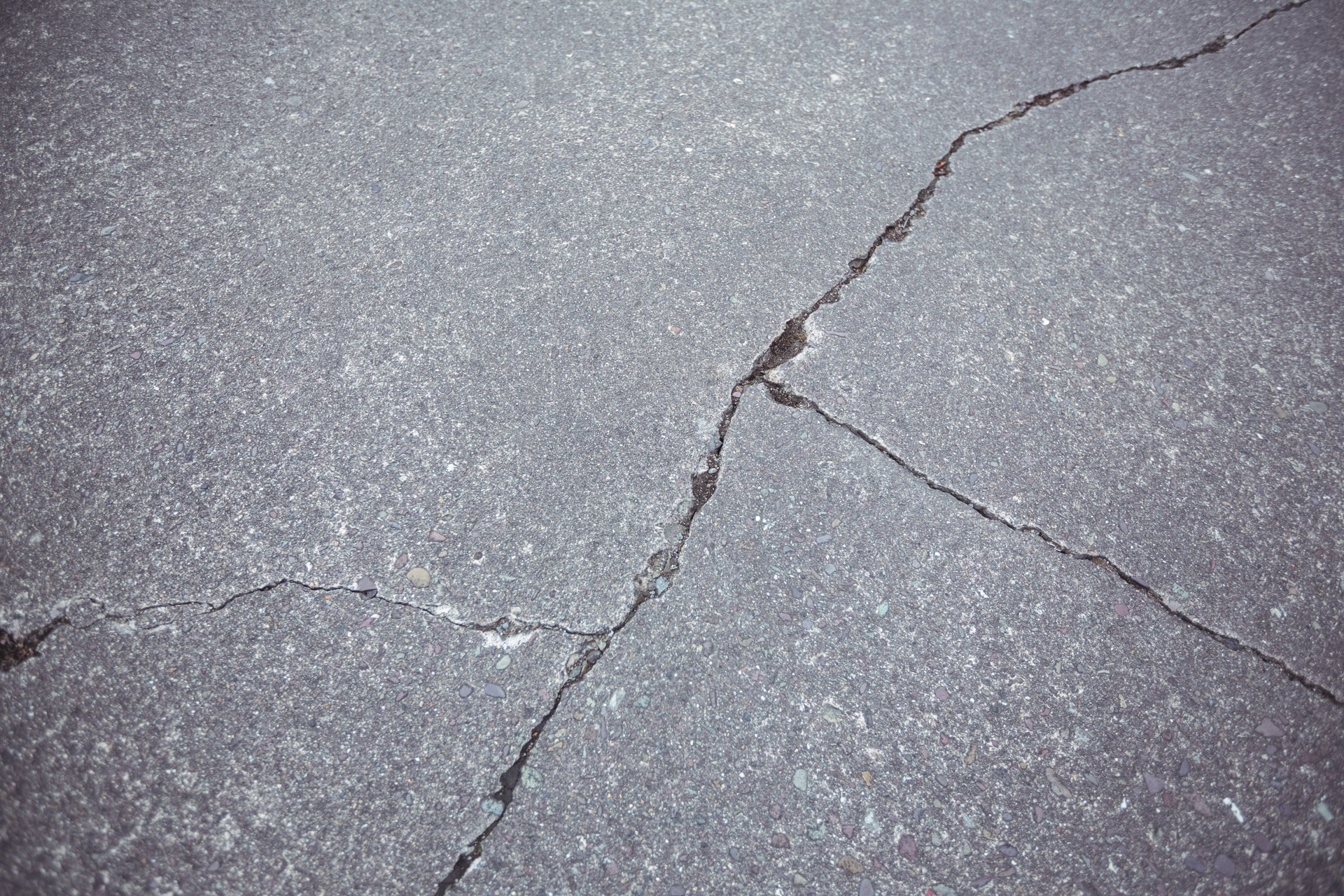
Asphalt Crack Repair in Leesburg, VA

Hot-Pour Rubberized Sealing · Freeze-Thaw Resistant

Leesburg Asphalt repairs asphalt cracks in driveways and parking lots throughout Loudoun County, VA using hot-pour rubberized crack sealing — the professional method that actually lasts through a Virginia winter. We use Crafco Ultraseal and Flex-A-Fill 9075R rubberized sealant, heated to 350–400°F in a direct-fire melter and applied with a pour wand. The sealer remains flexible through freeze-thaw cycling, with elastic recovery greater than 60% per ASTM D5329.

Our crack repair service covers linear crack sealing, crack filling before sealcoating, and alligator crack reconstruction for base-failure areas. Typical cost: $0.50–$3.00 per linear foot. A driveway with 50–100 linear feet of cracks costs $50–$300 to seal professionally.

Free estimates throughout Leesburg and Loudoun County.

(703) 382-5769

Free Crack Repair Estimate

Why Leesburg Asphalt is the Best at Asphalt Crack Repair

Leesburg Asphalt seals asphalt cracks throughout Leesburg, VA and Loudoun County using professional hot-pour rubberized products — not hardware store cold-pour that fails in the first winter freeze.

  • Hot-pour rubberized crack sealing only — Crafco Ultraseal and Flex-A-Fill 9075R at 350–400°F application temperature
  • Elastic recovery >60% per ASTM D5329 — stays flexible through Loudoun County's November–March freeze-thaw cycles
  • Crack assessment at every visit — we identify cracks that can be sealed vs. cracks indicating base failure requiring reconstruction
  • Cracks up to 1" wide sealed in a single pass; wider cracks use polyurethane backer rod plus hot-pour fill
  • Surface sanded flush to prevent trip hazard and allow sealcoating same day if scheduled
  • Minimum 40°F pavement temperature confirmed before application
  • DPOR Class A licensed — Virginia requires licensure for all paving and sealcoating work over $1,000
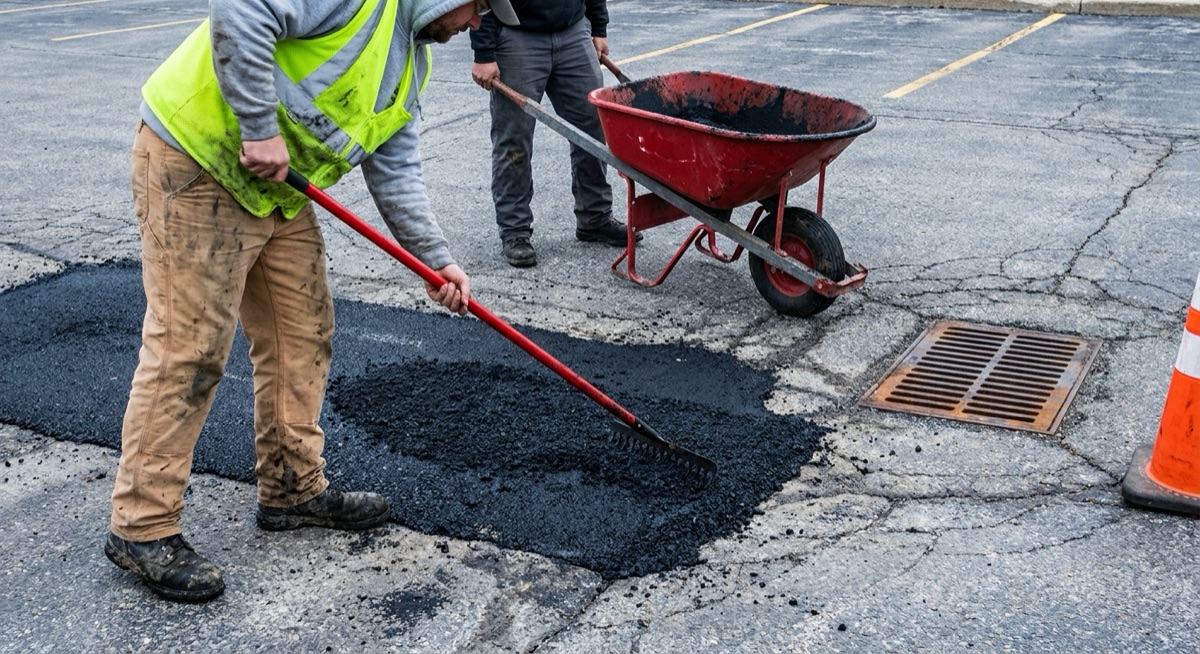
Asphalt crack repair in Leesburg Loudoun County VA
500+
Projects Completed
15
Years in Loudoun County
5.0
Star Google Rating
20+
Cities Served

Crack Types We Repair & Methods We Use

Hot-Pour Rubberized Crack Sealing

The professional standard for linear cracks up to 1" wide. Crafco Ultraseal or Flex-A-Fill 9075R is heated to 350–400°F in a direct-fire or oil-jacketed melter and poured into the prepared crack. Applied at ½" below the surface, sanded flush.

Yield: approximately 100 linear feet per 12.5 lbs for cracks ≤½" wide. Elastic recovery >60% per ASTM D5329 — the only crack product that stays flexible through a Virginia winter.

Alligator Crack Reconstruction

Alligator cracking — the interconnected scale-pattern cracking that indicates base failure — cannot be sealed. The failed section is saw-cut with clean square edges, removed, the aggregate base rebuilt with fresh VDOT 21A material, and SM-9.5A hot-mix asphalt placed and compacted to match the surrounding surface. This is a permanent repair.

Any contractor who claims to seal alligator cracking is misleading you.

Wide Crack Repair with Backer Rod

Cracks wider than 1" require a polyurethane backer rod installed at the proper depth-to-width ratio before hot-pour application. The backer rod controls sealant depth and creates the correct three-point adhesion geometry that allows the seal to stretch and recover without debonding. Skipping the backer rod on wide cracks results in premature sealant failure in the first winter.

Edge Crack & Raveling Repair

Edge crumbling at the driveway perimeter is typically caused by insufficient lateral support. Hot-pour sealing stabilizes edge cracks up to 1" wide. For severe edge breakup where material is crumbling away in chunks, the edge section must be saw-cut, base-repaired, and hot-patched with SM-9.5A to rebuild structural integrity before sealing.

Common in Loudoun County's wooded neighborhoods where tree roots exert lateral pressure.

Signs Your Leesburg Driveway Needs Crack Repair Now

Cracks that get through a Loudoun County winter without being sealed grow — each freeze-thaw cycle expands them from the inside. These signs indicate cracks that need sealing before the next season begins.

Cracks Wider Than 1/4 Inch

A crack that has widened to 1/4" is actively admitting water with every rain event. In Loudoun County's climate, that water will freeze inside the crack 30–40 times per winter — each freeze expanding the crack by another fraction. Cracks at 1/4" are still easily sealed with a single hot-pour pass.

By the time they've reached 1" width after a second winter, they require backer rod and more material. The cost differential: $1–$2 per linear foot now vs. $3–$4 per linear foot next year.

New Cracks Visible After Winter

Cracks that appeared or significantly widened over the winter are an urgent sign — they've already been through one freeze-thaw expansion cycle. Spring is the ideal time to seal them: the crack has opened to its widest post-winter state, temperatures are rising toward the 40°F minimum required for hot-pour application, and sealing now prevents the crack from going through another summer of UV-driven oxidation before the next winter. Don't defer spring crack repair to fall.

Edge Cracking and Perimeter Raveling

Cracks at the driveway edge — where the pavement transitions to soil, lawn, or a border — are under constant lateral stress from the soil on either side. Edge cracks tend to progress faster than interior cracks because they lose lateral support as the adjacent soil erodes. Early-stage edge cracking (cracks up to 1" wide along the perimeter) can be sealed with hot-pour.

Once the edge has crumbled away in chunks — blocks of asphalt separating from the body of the driveway — section repair is required before sealing.

Linear Cracks Spanning the Width

Transverse cracks that run all the way across the driveway — perpendicular to the direction of travel — are typically caused by thermal expansion and contraction stresses in the asphalt surface. They're common in driveways that weren't sealcoated during the first few years, allowing UV oxidation to make the binder brittle. These linear cracks are ideal candidates for hot-pour sealing before they connect with adjacent cracks and begin forming the alligator pattern that indicates base failure.

Cracks with Vegetation Growing In

Grass, weeds, or moss growing out of driveway cracks mean the crack has been open long enough and is wide enough for organic matter to take hold — typically 3/4" or wider. Plant roots exert significant lateral pressure on crack walls as they grow, accelerating the widening process. Vegetation inside a crack also retains moisture, keeping the crack wet longer than open cracks and worsening freeze-thaw damage.

Clear the vegetation and seal the crack before the roots go deeper and force a section repair instead.

Before Scheduling Sealcoating

Sealcoating over unsealed cracks is one of the most common driveway maintenance mistakes. Sealer applied over an open crack bridges it with a thin film that re-opens at the first hard freeze — by spring, you have a cracked sealcoat that looks worse than before. The correct sequence is always: crack repair first, allow 1 hour to set, then sealcoat.

Leesburg Asphalt combines crack fill and sealcoating in a single visit when both are needed, saving a mobilization charge and ensuring the right sequence every time.

The Crack Repair Process

1

Crack Assessment

We inspect all cracks, categorize them (linear vs. alligator, surface vs. full-depth, ≤1" vs. wider), and confirm pavement temperature is above 40°F. Any cracking pattern indicating base failure is identified and quoted separately as a reconstruction item. You get a clear explanation of what each repair addresses before we begin.

Assessment takes 15–30 minutes on a typical driveway.

2

Crack Cleaning

Cracks are blown clean with compressed air and any vegetation or debris removed. Clean cracks bond significantly better than contaminated ones — skipping this step is why DIY cold-pour repairs fail within a season. Wide cracks receive polyurethane backer rod at the correct depth before sealing.

This step takes 20–40 minutes depending on total crack footage.

3

Hot-Pour Application at 375°F

Crafco Ultraseal or Flex-A-Fill 9075R is heated to 375°F and applied to each crack at ½" below surface using a pour wand in a single fluid pass. No cold joints, no shrinkage gaps. Each cracked area is sanded while still hot to create a flush, non-skid surface.

Dries to touch in 15–30 minutes in warm conditions.

4

Same-Day Sealcoating Option

If driveway sealcoating is scheduled for the same visit, crack fill material is allowed to set for 1+ hour before sealcoat is applied over it. We schedule crack repair and sealcoating together when both are needed — it saves a mobilization fee and ensures the sealcoat goes on a properly prepped surface. Combined jobs are completed in a single 4–6 hour visit.

Crack Repair Cost Guide — Leesburg & Loudoun County

Repair TypeTypical CostNotes
Hot-pour sealing (≤½" wide)$0.50–$1.50/linear ftCrafco Ultraseal or Flex-A-Fill 9075R
Hot-pour sealing (½"–1" wide)$1.50–$3.00/linear ftHigher material usage per foot
Typical residential driveway (50–100 LF)$50–$300Minimum service charge applies
Backer rod + wide crack fill (>1")$2.50–$4.00/linear ftPolyurethane backer rod + hot-pour material
Alligator crack section repair$4–$8/sq ftSaw-cut, base rebuild, SM-9.5A hot-patch
Crack repair + sealcoating comboCombined quote — save one mobilization feeBest value when both are needed

Professional Hot-Pour vs. DIY Cold-Pour Crack Filler

Professional Hot-Pour

  • Applied at 350–400°F — bonds to dry asphalt completely
  • Elastic recovery >60% — flexes in freeze-thaw without cracking
  • Lasts 3–5+ years with normal traffic
  • ASTM D5329 tested — measurable performance spec
  • Can be sealcoated over same day (1-hour cure)

DIY Cold-Pour

  • Applied at ambient temperature — poor adhesion in cold weather
  • Becomes brittle below 32°F — cracks in first Virginia freeze
  • Typically fails within 1 freeze season
  • No measurable performance standard
  • Requires 24–48 hours cure before sealcoating

Why Crack Repair Is More Urgent in Loudoun County

Most of the continental US averages 15–25 freeze-thaw cycles per winter. Loudoun County averages 30–40 cycles between November and March — more than many Northern Virginia homeowners realize. Each cycle is a water-expansion event inside any unsealed crack: water infiltrates during above-freezing rain or snowmelt, then freezes when overnight temperatures drop below 32°F, expanding 9% in volume and pushing the crack walls apart.

This repeats dozens of times per winter. A crack that was 1/8" wide going into November is often 3/8" wide by March — in a single season — not because something structural has changed but because freeze-thaw has mechanically widened it. In Loudoun's climate, this process is accelerated by the clay soils that surround and underlie most driveways.

Clay holds water against the pavement edges and underbase longer than sandy or gravelly soils, extending the window of saturation that enables freeze-thaw damage.

The practical implication: crack repair in Loudoun County cannot be deferred the way it might be in a milder climate. A crack left unsealed for one full winter in Loudoun goes through enough freeze-thaw cycles to double or triple in width. The cost of sealing a 1/4" crack today is roughly the same as sealing three 1/4" cracks next year after winter has propagated the original crack laterally.

Spring crack repair — ideally in March or April, as temperatures climb back above 40°F — captures cracks at their post-winter worst and seals them before UV oxidation and summer heat open them further. Fall crack repair before the first hard freeze is the second-best window. Leesburg Asphalt recommends scheduling crack assessments in both March and September as part of a regular driveway maintenance schedule — the combination keeps Loudoun County freeze-thaw from compounding year over year.

Asphalt crack repair urgency in Loudoun County VA

Asphalt Crack Repair FAQ — Leesburg & Loudoun County

How much does asphalt crack repair cost in Leesburg, VA?

Hot-pour rubberized crack sealing runs $0.50–$3.00 per linear foot depending on crack width. A typical Leesburg driveway with 50–100 linear feet of cracks costs $50–$300 to seal professionally. Most contractors apply a minimum service charge.

Alligator-cracked sections requiring full reconstruction cost $4–$8 per square foot for the repair area. Combining crack sealing with sealcoating in one visit saves a mobilization fee — call for a combined quote.

What's the difference between hot-pour and cold-pour crack filler?
Hot-pour rubberized crack sealer — products like Crafco Ultraseal or Flex-A-Fill 9075R — is heated to 350–400°F and remains flexible through freeze-thaw cycles, with elastic recovery greater than 60% per ASTM D5329. Cold-pour products sold at hardware stores become brittle in Virginia winters and typically fail within one freeze season. Loudoun County's November–March freeze-thaw season makes cold-pour a waste of money for anything other than a very temporary cosmetic fix.
When should I repair cracks vs. resurface the entire driveway?
Crack sealing makes sense when cracks are isolated, linear, and less than 1" wide, and the overall surface is still structurally sound. Resurfacing (mill-and-overlay) makes more sense when alligator cracking covers more than 25% of the surface, the asphalt is more than 15 years old, or the surface is raveling significantly. At the free assessment we'll give you a straight recommendation — sometimes a $200 crack seal job saves years of life on a surface that would otherwise need a $5,000 resurfacing in 2–3 years.
Why do driveways crack so much in Loudoun County?

The primary cause is freeze-thaw cycling — water seeps into surface cracks during fall and winter, freezes and expands 9% in volume, then contracts when it thaws. This repeats 30–50 times per winter in Loudoun County's November–March season. Secondary causes include UV oxidation that makes asphalt brittle without sealcoating, clay-heavy soils in parts of Loudoun that expand when wet and contract when dry, and tree root pressure in wooded neighborhoods.

Sealing cracks early and sealcoating every 3–4 years is the best defense against this cycle.

Can you seal cracks and sealcoat on the same day?

Yes — this is actually the ideal sequence. Hot-pour rubberized crack fill cures to touch in 15–30 minutes in warm conditions and requires 1 hour before sealcoating over it. We schedule crack repair and sealcoating together as a single visit when both are needed.

Combining the services saves you one mobilization fee and ensures the sealcoat goes on a properly prepped surface with all cracks sealed below it. The combined job takes 4–6 hours on a typical 800–1,200 sq ft driveway.

How many years does hot-pour crack sealing last?

Professional hot-pour rubberized crack sealing — products like Crafco Ultraseal or Flex-A-Fill 9075R — typically lasts 3–7 years in Loudoun County's climate, depending on crack width, traffic volume, and whether sealcoating is applied over it afterward. Sealing a hot-pour filled crack with sealcoat extends the protection significantly by shielding the crack filler from direct UV and water exposure. Cold-pour products sold in hardware stores last one season at most in a Virginia freeze-thaw climate.

The cost difference between the two products is minimal; the performance difference is several years of protection.

What happens if I don't repair cracks in my driveway?

Unsealed cracks allow water to infiltrate the base layer with every rain event. In Loudoun County's climate with 30–40 freeze-thaw cycles per winter, water inside cracks expands 9% in volume with each freeze, mechanically widening the crack. A 1/4" crack left unrepaired for two winters becomes a 3/4" crack.

Water reaching the base layer saturates the aggregate and reduces bearing capacity — the beginning of the alligator cracking and pothole cycle. A $50–$200 crack sealing job this spring can prevent a $2,000–$5,000 resurfacing or replacement in 5–7 years. Crack repair is the highest-return maintenance investment available for an asphalt driveway.

Stop Cracks Before They Become Potholes

A $100 crack repair left unaddressed for a season becomes a $400 pothole patch. Leesburg Asphalt provides free on-site crack assessments throughout Loudoun County — call today.

(703) 382-5769 — Call for a Free Assessment
(703) 382-5769