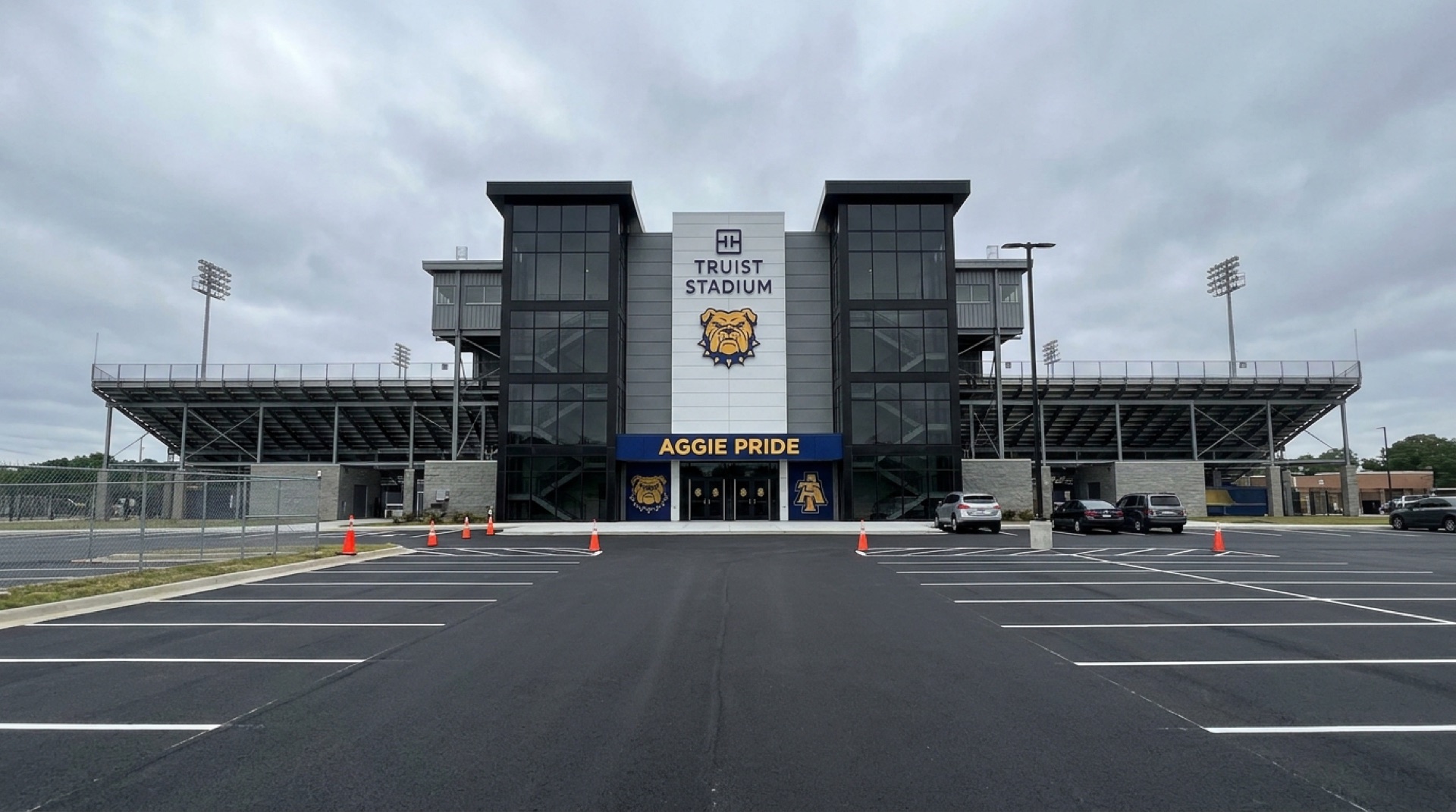
Parking Lot Sealcoating in Leesburg, VA

Commercial Sealcoating · Polymer-Modified Coal Tar · Spray & Squeegee Application

Leesburg Asphalt sealcoats commercial parking lots for businesses, property management companies, HOAs, and retail centers throughout Loudoun County, VA. We apply SealMaster and GemSeal polymer-modified coal tar emulsion sealer using professional spray equipment on open lot surfaces and hand-squeegee in tight areas near curbs, wheel stops, and striping. Commercial sealcoating protects the asphalt binder from UV oxidation, fuel and oil spills, and moisture penetration — extending parking lot life by 2–4 years per application cycle.

Parking lot sealcoating in Leesburg typically costs $0.12–$0.22 per square foot with a 2-coat application — $1,200–$2,200 for a 10,000 sq ft lot. We coordinate phased lot closures to minimize business disruption. Free estimates throughout Loudoun County.

(703) 382-5769

Free Sealcoating Quote

Why Leesburg Asphalt is the Best at Parking Lot Sealcoating

Leesburg Asphalt sealcoats commercial parking lots throughout Loudoun County, VA using SealMaster and GemSeal polymer-modified coal tar emulsion — applied at proper coverage rates with 2-coat application for lasting protection.

  • SealMaster and GemSeal polymer-modified coal tar emulsion — the commercial-grade standard, not watered-down residential product
  • 2-coat application at 0.08–0.12 gal/sq yd each coat — proper coverage per manufacturer spec
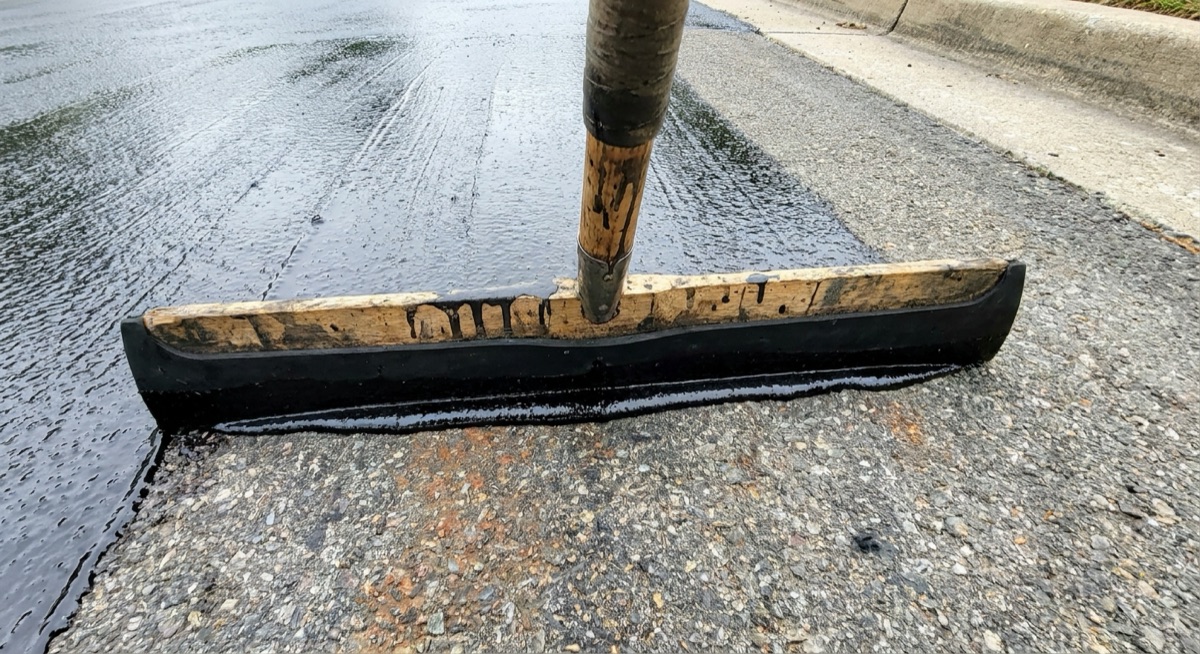
  • Spray application on open surfaces; hand-squeegee at curbs, wheel stops, and edges — both methods in one visit
  • Minimum 50°F surface and air temperature confirmed before application; no application within 24 hours of rain forecast
  • Surface blown clean with commercial blower before sealing; oil spots treated with oil primer for proper adhesion
  • Phased lot scheduling — we seal half the lot, let the other half remain open, then swap
  • Re-striping scheduled immediately after sealer cures (24–48 hours) so the lot isn't unmarked for more than 2 days
Parking lot sealcoating Leesburg Loudoun County VA
500+
Projects Completed
15
Years in Loudoun County
5.0
Star Google Rating
20+
Cities Served

What's Included in Commercial Parking Lot Sealcoating

Surface Preparation

Commercial blower clears the entire lot of debris, sand, and gravel before sealing. Oil spots are treated with oil-based primer that bonds to petroleum-contaminated surfaces where standard coal tar sealer won't adhere. Failed crack fill is removed and hot-pour crack sealing is applied to all cracks over 1/8" wide before sealcoating.

A sealcoat over unsealed cracks just bridges them temporarily — they reappear within one season.

2-Coat Sealer Application

SealMaster or GemSeal polymer-modified coal tar emulsion is applied in two coats. First coat goes down at 0.08–0.10 gal/sq yd, applied with an airless commercial spray system on open lot areas and hand-squeegeed along curb lines, wheel stops, and building edges. Second coat applied after 2–4 hours of dry time at 0.08–0.10 gal/sq yd in the opposite direction to the first coat.

Two-coat application doubles the sealer film thickness and significantly extends service life vs. one-coat application.

Phased Lot Access Plan

Commercial lots can't simply close for a full day. We divide the lot into two or more phases: seal Phase A while Phase B remains open to customers, then swap after 4–6 hours when Phase A is dry enough to drive on. Most commercial lots can be sealed in two phases in a single day.

For very large lots, we schedule overnight phasing — Phase A sealed during business hours, Phase B sealed after close and open by 7 AM. Phasing plan delivered with the estimate so you can plan customer communication.

Re-Striping Coordination

Sealcoating covers existing striping — the lot will have no visible lines for 24–48 hours after sealing while the sealer cures. We coordinate re-striping to immediately follow the sealer cure window so the lot is never unmarked for more than 2 days. Re-striping is included in most commercial sealcoating packages or quoted separately for accurate line-item budgeting.

ADA accessible stalls are always re-striped to current 2010 Standards dimensions.

Signs Your Leesburg Commercial Lot Needs Sealcoating

Commercial sealcoating done at the right time is the most cost-effective maintenance investment on any parking lot. These are the signs that the right time is now — or is overdue.

Surface Has Turned Gray or Brown

Fresh asphalt is jet black. As UV oxidation progresses, the surface gradually transitions from black to dark gray to medium gray to a dull brown-gray. At medium gray, the asphalt binder has lost significant flexibility and the surface has become brittle — the sealer film that protected it has worn through in high-traffic areas.

The color change is the visual indicator that oxidation has progressed into the surface and sealcoating is now overdue. Sealing at medium-gray preserves the asphalt; waiting until the lot is cracking extensively means crack sealing is required before sealing can help.

3+ Years Since Last Application

The functional life of a commercial-grade coal tar emulsion sealcoat applied at proper coverage is 3–5 years. In high-traffic areas — primary aisles, drive-through lanes, delivery zones — the film wears faster and may be depleted at 2–3 years. For property managers on a maintenance cycle, the 3-year mark is the right trigger for scheduling re-sealing.

Waiting until 4–5 years risks extending past the protection window in high-traffic zones. Sealcoating within the 3–4 year window, before the surface reaches medium-gray, is the optimum strategy for minimizing total lifecycle cost.

Visible Oil or Fuel Penetration Spots

Petroleum spills — motor oil, hydraulic fluid, fuel — are solvents for asphalt binder. A lot that serves customers with oil-leaking vehicles, or has a drive-through lane with frequent start-stop idling, accumulates petroleum penetration over time. Oil-penetrated asphalt becomes soft and loses structural integrity — the same vehicle loads that a sound surface would handle without deformation cause rutting and shoving in oil-softened areas.

Oil spots visible on the surface must be treated with an oil primer before sealcoating — standard coal tar sealer doesn't adhere to petroleum-saturated asphalt.

Hairline Cracks Starting to Appear

Hairline cracks (under 1/8" width) appearing in the surface are the warning sign that oxidation cracking has begun — the binder has become brittle enough to crack under thermal cycling and minor surface stress. At the hairline crack stage, sealcoating can still provide meaningful protection: the sealer penetrates and seals small cracks before they grow. Once cracks reach 1/8"–1/4", hot-pour crack sealing must be done before the sealcoat is applied.

Once alligator cracking or base failure is present, sealcoating alone won't stop deterioration — more significant repair is needed first.

Before a Harsh Loudoun County Winter

Loudoun County's 30–40 freeze-thaw cycles between November and March are the most damaging period for unprotected asphalt. Water infiltrates micro-cracks, freezes and expands 9% in volume, and enlarges those cracks. Sealcoating in September–October — the last viable window before temperatures drop below the 50°F application minimum — protects the surface through the winter cycle.

Property managers who have a lot at the medium-gray stage should prioritize getting a sealcoat on before the freeze-thaw season rather than deferring to spring, when they'll find the lot has deteriorated significantly more than expected.

After New Paving or Resurfacing (Wait 12 Months)

New asphalt should cure for 12 months before the first sealcoating application. During this curing period, the binder is still off-gassing volatile components and the surface is slightly flexible — sealing too early traps those volatiles and can cause the sealer to peel. At the 12-month mark, new asphalt is fully cured and ready for its first protective coat.

This first application is the most important of the lot's life — it goes on fresh, unoxidized asphalt and provides the baseline protection layer that makes subsequent applications more effective. Schedule it for the September before the first full winter the lot has experienced.

The Commercial Sealcoating Process

1

Pre-Seal Assessment

On-site assessment confirms the lot is ready for sealcoating: surface temperature above 50°F, no rain expected for 24 hours, no ponding water, and no cracks wider than 1/8" left unsealed. We identify oil spots requiring primer treatment and any areas with crumbling surface that need patching before sealing. Areas with fresh pothole patches must cure for minimum 30 days before sealcoating over them.

Assessment same day as application for small lots, or 1–2 days prior for large lots requiring detailed planning.

2

Surface Prep & Crack Sealing

Lot is blown clean with a commercial walk-behind blower. Oil spots treated with oil primer — dry time 30–60 minutes. Cracks 1/8" wide or larger sealed with hot-pour Crafco Ultraseal or Flex-A-Fill 9075R, sanded flush.

Allow hot-pour to cure 1 hour minimum before sealcoating over it. Total prep time: 1–2 hours for a 10,000 sq ft lot with moderate cracks. Extensive cracking may push prep to a full day if combined with pothole repair.

3

2-Coat Sealer Application

First coat of polymer-modified coal tar emulsion applied at 0.08–0.10 gal/sq yd by airless spray on open areas and hand-squeegee at edges. 2–4 hours dry time between coats. Second coat applied in the perpendicular direction to the first coat at the same coverage rate. Total application time: 2–4 hours for a 10,000 sq ft lot.

The lot can accept vehicle traffic 24 hours after the second coat in warm, dry weather (48 hours if temperatures drop below 60°F overnight).

4

Re-Striping After Cure

Re-striping is scheduled at the 24–48 hour mark after the second coat is applied. Polymer-modified traffic paint is applied using an airless line-striper — standard stall lines at 4" width, ADA accessible stalls with access aisle hash marks and ISA symbols, fire lane markings, directional arrows, and any curb markings specified in the layout plan. The lot is fully operational with fresh striping within 48 hours of sealcoat application in typical summer conditions.

Parking Lot Sealcoating Cost Guide — Leesburg & Loudoun County

Lot Size2-Coat Sealcoat CostNotes
Small lot (up to 5,000 sq ft)$600–$1,100Minimum mobilization applies
Medium lot (5,000–15,000 sq ft)$1,000–$3,300$0.12–$0.22/sq ft depending on condition
Large lot (15,000–40,000 sq ft)$2,500–$8,800Volume pricing reduces per-sq-ft cost
Oil spot treatment (per spot)$25–$75/spotOil primer required before sealcoat adhesion
Crack sealing (pre-seal)$0.50–$3.00/linear ftHot-pour rubberized; done same day as sealing
Re-striping (after sealcoat)$500–$2,500Included or quoted separately per property

The Real Cost of Skipping Sealcoating

With Sealcoating (3-Year Cycle)

A 10,000 sq ft lot sealcoated every 3 years spends approximately $1,500–$2,200 per sealcoating cycle, plus $500 for re-striping. Over a 24-year period that's 8 sealcoating cycles at $2,000 average = $16,000 total. The lot surface remains UV-protected, fuel-resistant, and waterproof.

The underlying asphalt structure is preserved. Reconstruction at year 25: $50,000+.

Without Sealcoating

Without sealcoating, UV oxidation turns the surface gray and brittle within 3–5 years. Cracks form, water infiltrates, base saturates. By year 12–15, the lot needs full reconstruction at $50,000+.

Skip 8 sealcoating cycles and save $16,000 — then spend $50,000 for early reconstruction. That's a $34,000 net cost for not maintaining the lot. Sealcoating is the highest ROI maintenance item in commercial property management.

Commercial Sealcoating in the Loudoun County Market

Loudoun County's commercial parking lot sealcoating market is driven by two overlapping cycles: the 20–30 year lot repaving cycle that peaked during the 1995–2015 build-out era, and the 3–4 year sealcoating maintenance cycle that should accompany it. The challenge is that many commercial lots built in that era established a maintenance practice — or didn't — and lots that didn't sealcoat on a regular cycle are now entering the reconstruction phase 5–10 years earlier than they should. Property managers inheriting older lots in the Route 7, Route 28, and downtown Leesburg corridors often find that a consistent sealcoating program is the single most impactful corrective action they can take to extend lot life and defer the capital cost of mill-and-overlay.

Leesburg Asphalt provides multi-year sealcoating contracts to property management companies at a discounted rate — locking in the annual maintenance cost while eliminating the year-to-year scheduling friction that causes maintenance cycles to slip.

The HOA sealcoating segment in master-planned Loudoun communities — South Riding, Broadlands, Lansdowne, Brambleton, Cascades, and Countryside — represents a distinct market with different procurement dynamics. HOA boards approve sealcoating budgets on a fiscal year cycle, which often means September approvals miss the ideal late-summer application window and projects roll to the following year. Leesburg Asphalt works with HOA property managers to schedule sealcoating in the spring and early summer before HOA board votes — providing draft estimates in March that can be presented for spring budget approval and executed in May–July when temperatures are optimal.

We also provide phasing plans that allow community amenity lots to remain partially accessible throughout the project, which is a requirement for most HOA boards managing facilities used by residents daily.

Commercial parking lot sealcoating large lot Loudoun County VA

Parking Lot Sealcoating FAQ — Leesburg & Loudoun County

How much does parking lot sealcoating cost in Leesburg, VA?

Commercial parking lot sealcoating in Leesburg runs $0.12–$0.22 per square foot for a 2-coat polymer-modified coal tar application. A 10,000 sq ft lot costs approximately $1,200–$2,200 for sealcoating plus $500–$1,000 for re-striping. Oil spot treatment ($25–$75 per spot) and crack sealing ($0.50–$3.00 per linear foot) may add to the total depending on lot condition.

Volume pricing reduces the per-square-foot rate for larger lots — a 30,000 sq ft lot will cost less per sq ft than a 5,000 sq ft lot.

How long does parking lot sealcoating last?

A properly applied 2-coat commercial sealcoating typically lasts 3–5 years on a commercial parking lot with normal passenger vehicle traffic. High-traffic areas (drive-through lanes, primary traffic aisles) wear faster than stall interiors. Lots with heavy truck delivery traffic may need re-sealing every 2–3 years in the delivery areas.

The coal tar emulsion fades from dark black to medium gray as it ages — that's normal wear, not failure. Re-sealing should be scheduled when the surface starts showing gray areas and early oxidation, not after cracking begins.

How long does a commercial lot need to be closed for sealcoating?

With phased sealcoating, no section of the lot needs to be closed for more than 6–8 hours at a time. We seal half the lot, allow 4–6 hours of dry time, then open that half and close the other half. Vehicle traffic can return to a sealed surface after 24 hours in warm, dry conditions (48 hours if overnight temperatures drop below 60°F).

Re-striping is done at the 24–48 hour mark. The lot is fully operational with fresh sealer and striping within 48–72 hours of the project start.

How often should a commercial parking lot be sealcoated?

Commercial parking lots in Loudoun County should be sealcoated every 3–4 years as a standard maintenance cycle. New asphalt should cure for 12 months before the first sealcoating. Lots with oil spills, heavy truck traffic, or significant UV exposure may benefit from a 2–3 year cycle.

The inspection trigger: when the surface looks medium-gray and has started showing hairline cracks, it's time to sealcoat. Don't wait until the surface is showing full cracking — at that point, crack sealing is required before sealcoating can help, and the cost goes up.

Is coal tar sealcoating safe for commercial lots in Virginia?

Coal tar emulsion sealer is legal in Virginia and widely used for commercial parking lots throughout Loudoun County and Northern Virginia. Several jurisdictions in the Mid-Atlantic and nationally have restricted coal tar sealer due to PAH (polycyclic aromatic hydrocarbon) runoff concerns, but Virginia has not enacted such restrictions as of 2026. The alternative — asphalt-based emulsion sealers — provides comparable UV and water protection at a similar cost, with lower PAH content.

Leesburg Asphalt uses both SealMaster and GemSeal polymer-modified coal tar formulations, and can apply asphalt-based emulsion on request for property owners with environmental preferences or properties adjacent to stormwater-sensitive areas like Loudoun County stream buffers and RPAs.

Can a commercial lot be sealcoated in sections over multiple days?

Yes — for very large lots or lots that cannot tolerate any reduction in available parking during business hours, we can phase sealcoating over multiple days. Day 1: seal the rear sections and low-traffic areas; Day 2: seal the primary aisles and high-traffic areas after business hours or over a weekend. Multi-day phasing requires a second mobilization, which adds to the total cost, but for a 50,000+ sq ft lot where maintaining maximum parking availability is critical, multi-day phasing is the right approach.

We also offer early-morning start times (5–6 AM) for lots that need to be open by 8 AM — sealcoat applied at 5 AM is typically dry to vehicle traffic by 8–9 AM in warm weather.

Protect Your Parking Lot Investment

Leesburg Asphalt sealcoats commercial parking lots throughout Loudoun County — phased scheduling, crack sealing, re-striping all in one visit. Free estimates for commercial properties of any size.

(703) 382-5769 — Free Commercial Sealcoating Estimate
(703) 382-5769