Driveway Sealcoating in Leesburg, VA

Commercial-Grade Products · Every 3 Years for Loudoun County

Leesburg Asphalt applies commercial-grade driveway sealcoating throughout Loudoun County, VA — protecting asphalt driveways from UV oxidation, water infiltration, and the freeze-thaw damage that Loudoun County's November–March winters cause every year. We use SealMaster and GemSeal coal tar emulsion and polymer-modified asphalt emulsion (PMM) sealers — not the diluted hardware store products, but the same commercial-duty formulations used on airport taxiways and municipal parking lots.

Sealcoating every 3 years can extend a driveway's life from 12–15 years to 25–30 years. Typical cost: $0.15–$0.25 per sq ft. A standard 600 sq ft two-car driveway costs $90–$150.

Free on-site estimates — we don't quote by phone.

(703) 382-5769

Free Sealcoating Estimate

Why Leesburg Asphalt is the Best at Driveway Sealcoating

Leesburg Asphalt applies commercial-grade SealMaster and GemSeal sealcoating products to residential driveways throughout Leesburg, VA and Loudoun County — licensed PAV contractor, 2-coat application, crack prep included.

  • Commercial-grade products only — SealMaster and GemSeal, not diluted hardware store sealers
  • 2-coat application by squeegee or spray, diluted to manufacturer specification (25–30% water)
  • Crack filling completed before sealcoating — we don't seal over open cracks
  • Minimum 50°F air and pavement temperature verified before application
  • 24–48 hour cure time before reopening — we communicate exact timing
  • Coal tar emulsion or polymer-modified asphalt emulsion (PMM) — matched to driveway condition and customer preference
  • DPOR Class A licensed contractor — licensed for all asphalt paving and sealcoating work in Virginia
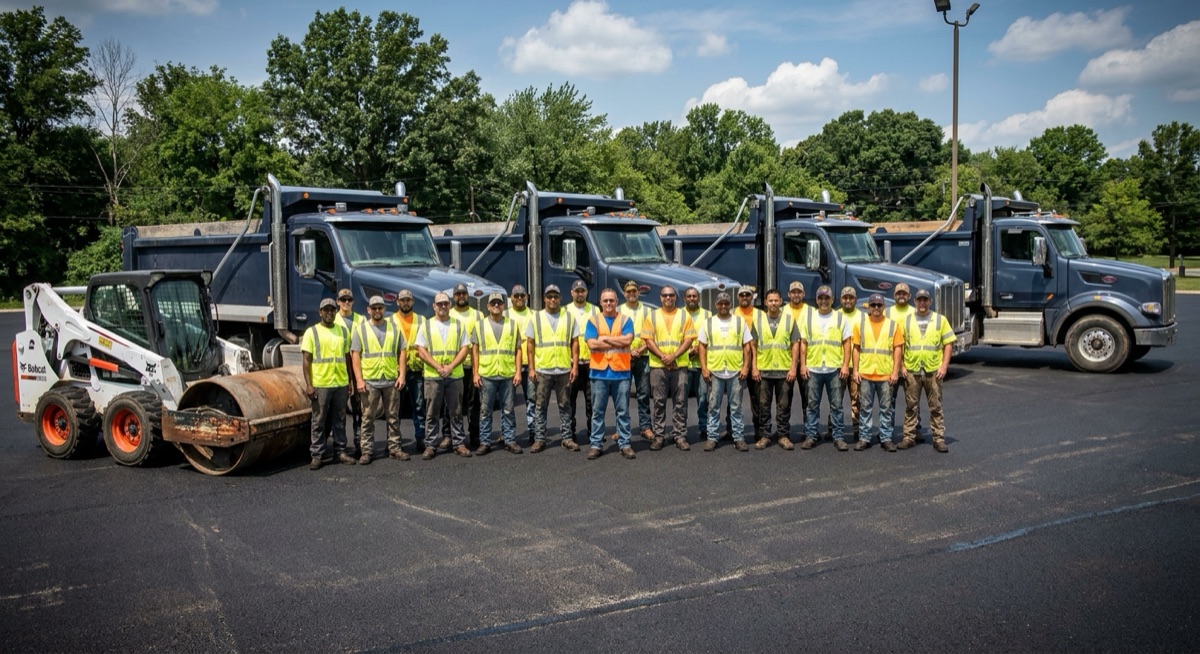
Leesburg Asphalt team serving Loudoun County VA
500+
Projects Completed
15
Years in Loudoun County
5.0
Star Google Rating
20+
Cities Served

Sealcoating Products & Application Types

Not all sealcoating products are equal. Leesburg Asphalt uses the same commercial-duty formulations applied on airports and municipal lots — not the consumer products that wash off in a Virginia winter.

Coal Tar Emulsion Sealer

The industry standard in the eastern US — SealMaster and GemSeal coal tar emulsion creates a hard, dense film that resists fuel spills, UV oxidation, and water infiltration better than any alternative. Applied in 2 coats diluted to manufacturer spec (typically 25–30% water). Provides the deepest, most uniform black finish and the longest protection period between applications.

Polymer-Modified Asphalt Emulsion (PMM)

Polymer-Modified MasterSeal (PMM) is the environmentally preferred alternative — significantly lower PAH content than coal tar while maintaining comparable performance. The polymer modifier adds flexibility, which improves resistance to Loudoun County's freeze-thaw cycles. Recommended for driveways near storm drain inlets or where coal tar restrictions apply.

Same 2-coat application process.

Squeegee vs. Spray Application

Squeegee application works the sealer into surface pores and microcracks, maximizing adhesion — the preferred method for residential driveways with any surface texture. Spray application provides faster, more uniform coverage on large flat surfaces like parking lots. For residential driveways, Leesburg Asphalt defaults to squeegee application on the first coat and spray on the second coat for the best combination of adhesion and coverage.

Crack Prep Before Sealcoating

Applying sealcoat over open cracks is a cosmetic fix at best — it bridges the crack for one season before the sealer film tears. Leesburg Asphalt fills all cracks with hot-pour rubberized sealer (Crafco Ultraseal or Flex-A-Fill 9075R, applied at 375°F) before sealcoating. Crack fill prep costs $0.35–$0.40 per square foot of cracked area and is always recommended before the sealcoat goes down.

Signs Your Leesburg Driveway Is Due for Sealcoating

Most homeowners wait too long to sealcoat — by the time the driveway looks bad, UV oxidation and water infiltration have already begun structural damage. These are the signs that your driveway needs sealcoating now, not next season.

Gray or Faded Color (UV Oxidation)

Fresh asphalt is deep black. As UV radiation oxidizes the petroleum binder, the surface fades to dark gray, then light gray over 3–7 years without protection. That color change isn't just cosmetic — it indicates the binder is hardening and losing its ability to hold aggregate.

A gray surface is still sealable; a fully oxidized chalky-gray surface has crossed into territory where sealcoating is less effective and resurfacing may be the better call.

Hairline or Oxidation Cracking

Fine surface cracks — thinner than a pencil — forming in a grid or random pattern across the surface are called oxidation or thermal cracking. They develop when the binder becomes brittle from UV exposure and no longer flexes with temperature changes. At this early stage, hot-pour crack filler followed by sealcoating can seal them and halt progression.

Left unsealed, these hairline cracks widen, water infiltrates, and freeze-thaw cycles expand them into structural failures.

Water No Longer Beads on the Surface

A well-sealed driveway sheds water cleanly — rain beads and runs off the surface. When sealcoating has worn through, water soaks into the asphalt surface pores rather than beading. You'll notice this after rain: a sealed driveway dries quickly, an unsealed one stays dark and wet longer.

This is your most reliable indicator that the sealer film has worn thin and reapplication is needed before the next freeze-thaw season.

Surface Raveling (Loose Granules)

If you're finding fine aggregate (stone dust or small pebbles) on your garage floor or swept off the driveway, the surface is raveling — the oxidized binder is releasing its grip on the aggregate. Early-stage raveling is still a sealcoating candidate: sealer penetrates the loosened surface and re-bonds the aggregate. Advanced raveling, where the surface has a noticeably rough, granular texture, requires resurfacing rather than sealcoating to achieve a durable result.

3+ Years Since Last Application

In Loudoun County's climate — with 30–40 freeze-thaw cycles per winter and hot July/August UV exposure — sealcoat film breaks down in 2–4 years under normal vehicle traffic. If it's been 3 years or more since your last application, the sealer has worn through in the high-traffic areas (tire tracks, turning zones) even if it still looks intact elsewhere. Schedule ahead of the fall window: September–mid-October gives stable temperatures and maximum cure time before November's first freeze.

Before Crack Filling (Spring Prep)

Spring is when cracks from the winter's freeze-thaw expansion become most visible. The right sequence before sealcoating is crack fill first, then sealcoat — applying sealer over unfilled cracks bridges them temporarily but doesn't prevent re-opening. If you have cracks wider than 1/4" visible after winter, the correct next step is hot-pour rubberized crack filler (Crafco Ultraseal or Flex-A-Fill 9075R) applied at 375°F, let it set, then apply the sealcoat over a fully prepped surface.

The Sealcoating Process — What to Expect

1

Scheduling & Weather Check

We schedule sealcoating only when air and pavement temperatures are at least 50°F with no rain forecast for 24–48 hours after application. We coordinate the timing with your schedule and communicate the cure window clearly before arrival.

2

Surface Cleaning & Crack Fill

Driveway is swept and blown clean of debris. All cracks are filled with hot-pour rubberized sealer heated to 375°F and sanded flush. Oil spots are treated with a primer — untreated oil prevents sealer adhesion.

We allow crack fill material to set before applying sealer (minimum 1 hour).

3

2-Coat Sealer Application

First coat applied by squeegee, working the sealer into surface pores. After drying (1–2 hours in warm weather), second coat applied by squeegee or spray. Edges edged to a clean, uniform line.

Total sealer depth: approximately 1/16" when dry.

4

Cure & Traffic Timing

Sealcoated driveways need 24–48 hours before vehicle traffic in normal conditions (70°F+, sunny). In cooler or cloudy conditions, allow 48–72 hours. Walking on the sealed surface should be avoided for 4–6 hours.

We communicate exact timing before leaving the site.

Sealcoating Cost Guide — Leesburg, VA

Sealcoating is the most cost-effective maintenance investment for an asphalt driveway. A $150 sealcoat every 3 years prevents $4,000–$9,000 in resurfacing or replacement costs.

Driveway SizeEstimated CostNotes
Small (300 sq ft)$45–$75Single-car driveway; minimum service charge may apply
Standard (600 sq ft)$90–$150Typical two-car driveway; 2-coat application
Large (1,000 sq ft)$150–$250Large residential driveway or turnaround area
Estate Driveway (2,000 sq ft)$300–$500Long driveways common in Selma Estates, Raspberry Falls
Crack Fill Add-On+$0.35–$0.40/sq ftHot-pour rubberized fill on cracked areas before sealcoating
PMM Upgrade+10–15%Polymer-Modified MasterSeal — environmentally preferred option

All pricing at $0.15–$0.25/sq ft. Minimum service charges may apply for very small driveways. Call (703) 382-5769 for a free estimate.

Sealcoating vs. Not Sealcoating — The 20-Year Math

UV oxidation alone turns an asphalt surface gray and brittle within 3–5 years without sealcoating. Here's what the cost comparison looks like over a 20-year period for a standard 600 sq ft Loudoun County driveway.

With Regular Sealcoating

Sealcoating (every 3 yrs × 6)$720–$900
Crack repair (minimal)$100–$200
Full replacement needed at yr…Year 25–30
Total 20-year maintenance cost$820–$1,100
Driveway still performing well at year 20

Without Sealcoating

Sealcoating$0
Crack repair (progressive)$500–$1,500
Full replacement needed at yr…Year 12–15
Replacement cost (600 sq ft)$2,400–$6,000
Driveway replaced at year 12–15, then again before year 25

Leesburg Asphalt recommends the sealcoating schedule that's right for your driveway's age and condition — we'll tell you if your driveway isn't a good sealcoating candidate (cracked base requires repair first).

Sealcoating in Loudoun County: What Makes This Climate Different

Sealcoating schedules that work in the Mid-Atlantic on average need to be applied more aggressively in Loudoun County. The reason is the combination of UV intensity and freeze-thaw cycle count. Northern Virginia summers regularly reach 90–95°F in July and August — the same UV load that breaks down pavement binder also degrades sealcoat film faster than climates further north.

Then from November through March, the county typically cycles through 30–40 freeze-thaw events. Each freeze-thaw event puts mechanical stress on the sealer film — expanding and contracting it alongside the pavement beneath. A sealcoat applied in September and exposed to a hard Loudoun County winter will show more wear by the following spring than the same product applied in a milder climate.

The practical implication: scheduling your sealcoating every 2–3 years (not 3–4 as some contractors recommend) keeps the protective film intact through the full winter season.

Loudoun County's clay soil composition also affects sealcoating performance at the edges and transitions of a driveway. Clay that was disturbed during original driveway construction heaves more aggressively in winter than consolidated soil — this movement stresses the asphalt at the edges and can cause edge cracking or delamination of the sealer film at the perimeter. Leesburg Asphalt edges all sealcoating jobs cleanly and pays particular attention to edge condition during the pre-application inspection.

Driveways with clay soil undercutting at the edges may need edge stabilization before sealcoating for the sealer to bond correctly and hold through the season. The September–October application window — stable temperatures, low humidity, rain tapering — gives SealMaster and GemSeal products the optimal cure time before November's first hard freeze, which is why we recommend scheduling in early fall rather than waiting until spring.
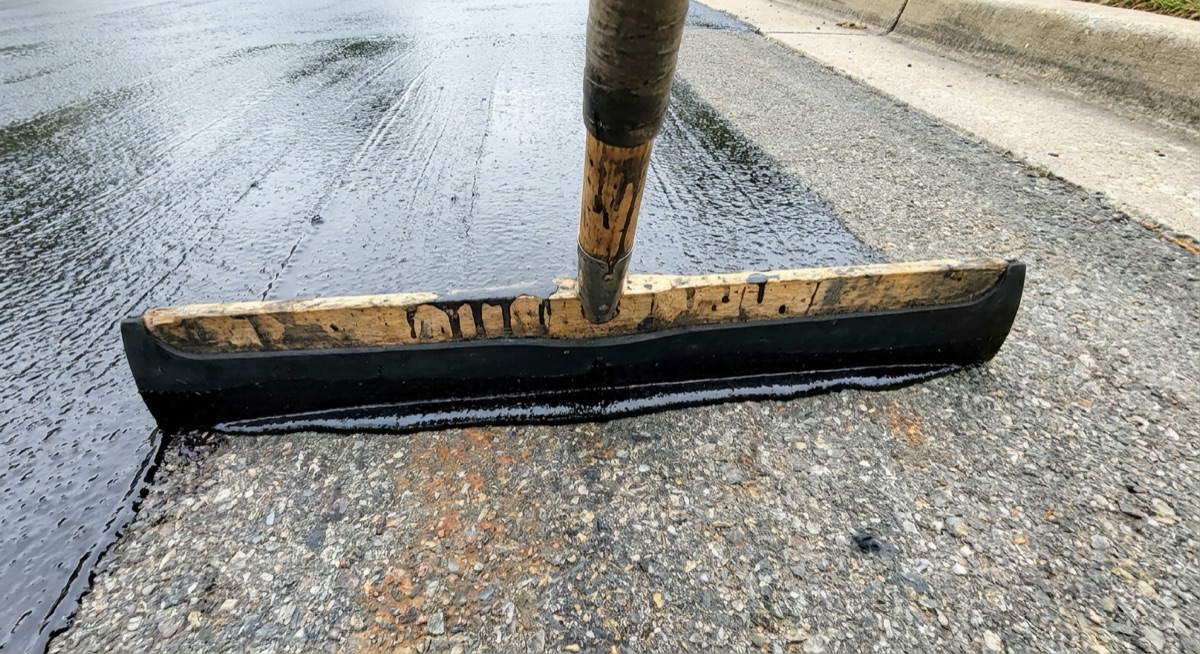
Driveway sealcoating application in Leesburg VA

Driveway Sealcoating FAQ — Leesburg & Loudoun County

How much does driveway sealcoating cost?

Professional driveway sealcoating runs $0.15–$0.25 per square foot. A standard two-car driveway (600 sq ft) costs $90–$150. Driveways with cracks that need filling first add $0.35–$0.40 per square foot for the cracked areas.

Professional-grade products (SealMaster, GemSeal) applied by a licensed contractor outperform hardware store bucket sealers significantly — commercial-grade coal tar or asphalt emulsion creates a harder, more durable film that protects through a Loudoun County winter.

How often should I sealcoat my driveway?
Every 3 years for residential driveways in Loudoun County's climate is the recommended schedule. The November–March freeze-thaw season accelerates UV oxidation damage — sealing on schedule keeps the surface protected. Wait 6–12 months after a new asphalt installation before applying the first sealcoat — the asphalt needs to fully cure and off-gas before a sealant is applied over it.
Can I sealcoat a new driveway right away?

No — wait at least 6 months, ideally 12 months after installation. Fresh asphalt contains petroleum oils that need time to evaporate and harden. Applying sealcoat too soon traps these oils and prevents full curing, which weakens the pavement surface.

The driveway will look dark and appear cured well before it actually is — typically the surface has cured enough to seal at the 6–12 month mark.

What happens if I don't sealcoat my driveway?

Without sealcoating, UV oxidation turns the surface gray and brittle within 3–5 years. Water infiltrates hairline cracks, which expand during freeze-thaw cycles — Loudoun County's clay soils and cold winters accelerate this damage significantly. What starts as surface cracking becomes structural deterioration: alligator cracking, potholes, and base failure.

A $150 sealcoat every 3 years prevents $4,000–$9,000 in resurfacing or full replacement costs over a 20-year period.

What sealcoating product does Leesburg Asphalt use?
Leesburg Asphalt uses commercial-grade products from SealMaster and GemSeal — the two leading professional sealcoating suppliers in the eastern US. We apply coal tar emulsion or polymer-modified asphalt emulsion (PMM) sealers depending on the application and customer preference. These are not diluted hardware store products — they're the same commercial-duty formulations used on airport taxiways and municipal parking lots throughout Virginia.
What temperature does it need to be to sealcoat a driveway?

Both air and pavement surface temperatures must be at least 50°F at the time of application and for 24 hours afterward for sealcoat to cure properly. Below 50°F, the emulsion in the sealer doesn't break (separate from its water carrier) correctly, leaving a soft, chalky film that won't bond to the asphalt. Leesburg Asphalt checks weather forecasts and pavement temperature with a surface thermometer before every job — we will reschedule rather than apply in marginal conditions.

The ideal range is 60–85°F with low humidity and no rain in the 24-hour forecast. This is why fall scheduling (September–mid-October) is the most reliable window: temperatures are in that range, nights are cooling but days stay warm, and summer thunderstorm patterns have mostly cleared.

Can I sealcoat a driveway that has cracks or potholes?

Sealcoating over open cracks is a common mistake — the sealer bridges the crack temporarily but re-opens within one freeze-thaw cycle. The correct sequence is: fill all cracks first with hot-pour rubberized sealer (Crafco Ultraseal or Flex-A-Fill 9075R at 375°F), allow to cool and set for at least 1 hour, then apply sealcoat. Potholes must be repaired with hot-patch or infrared asphalt before sealcoating — sealcoating does not structurally repair potholes.

During an on-site estimate, Leesburg Asphalt assesses crack fill requirements and includes them in the written quote so you know the full cost upfront. If crack damage is extensive (alligator cracking, base failure), we'll tell you sealcoating won't help and recommend resurfacing or replacement instead.

Protect Your Driveway Before Winter

Leesburg Asphalt provides free on-site sealcoating estimates throughout Loudoun County. September–October is the best window — stable temperatures, no rain delays, and maximum protection before freeze-thaw season begins.

(703) 382-5769 — Call for a Free Estimate
(703) 382-5769