Leesburg Asphalt provides asphalt cold milling (cold planing) for driveways, parking lots, and private roads throughout Loudoun County, VA. Cold milling uses a rotating drum with carbide cutting teeth to remove the existing asphalt surface to a precise depth — typically 1.5"–2" for standard mill-and-overlay or up to 4" for deep repairs. We operate a Wirtgen W 210i cold milling machine that delivers precision depth control within ±⅛" and grade correction for cross-slope and drainage improvements.
Asphalt milling cost in Leesburg runs $1.50–$3.50 per square foot depending on mill depth and mobilization. All milled material (RAP — Recycled Asphalt Pavement) is transported to an asphalt plant and recycled into new mix — none goes to landfill. Free estimates for commercial and residential milling projects.
Leesburg Asphalt performs asphalt cold milling for driveways, parking lots, and private roads throughout Loudoun County using a Wirtgen W 210i — precision depth control within ±⅛" and automatic cross-slope correction.
The most common milling application. When a parking lot or driveway has surface distress (cracking, rutting, raveling) but a sound base, milling removes the deteriorated surface layer and any accumulated buildup from previous overlays. This allows the new SM-9.5A overlay to be placed at the correct depth without raising finished grades above garage floors, curb inlets, or utility access covers.
Standard mill depth: 1.5"–2".
If a parking lot or driveway has areas where water pools (bird-bath depression), the milling machine can be used for precision grade correction — removing more material in high areas and less in low areas to restore the proper 2% cross-slope for drainage. Drainage corrections done at the milling stage eliminate the ponding problem permanently, whereas a straight overlay over a poorly graded surface just restores the same drainage problem at a higher elevation.
Garage floor transitions, drain inlets, manhole covers, curb and gutter interfaces, and ADA ramp landings all have fixed elevations. When paving over an existing surface would raise the finished grade above these fixed features, milling is required to remove the old surface first. Many Loudoun County driveway and parking lot projects require milling at the garage apron and curb cut to prevent grade conflicts with the new overlay thickness.
When base failure is localized rather than widespread, deep milling (3"–4") in specific areas provides access to the base for repair without removing the entire surface. After base repair, the milled area is filled with new hot-mix to match the adjacent surface grade. More cost-effective than saw-cut removal when the failed area has irregular edges and the existing asphalt layer is thick enough for the milling drum to access the problem depth.
Not every resurfacing project requires milling — but certain conditions make milling necessary before overlay. These are the indicators that a straight overlay won't work.
This is the most common reason milling is required on Loudoun County residential driveways. When the existing asphalt is already at or near the garage floor threshold elevation, adding another 1.5"–2" overlay without first removing the old surface creates a grade conflict — water drains into the garage rather than away from it. We measure the existing surface elevation relative to the garage floor at every driveway estimate.
If the gap is less than 2", milling is required before a new overlay can be placed without creating a drainage problem.
Each overlay adds 1.5"–2" to the surface elevation. A driveway or parking lot that has received two previous overlays without milling has built up 3"–4" of asphalt above the original base — and may have developed flexibility loss and surface delamination between layers. When the existing surface exceeds 4"–5" total depth without base improvement, additional overlay adds surface layer without addressing the underlying structural issues.
Milling removes accumulated layers and starts fresh at the correct depth.
Rutting — longitudinal depressions along wheel paths — cannot be corrected by a standard overlay. Paving over a rutted surface restores surface smoothness temporarily but the depressions in the underlying layer return as the new surface conforms to the same wheel path loading over time. The correct fix is milling: the milling machine can be programmed to remove more material from rutted areas and less from high areas, correcting the grade in the milling pass before the new overlay is placed flat.
Ruts deeper than 3/4" typically indicate a need for mill-before-overlay.
Low spots that collect water — commonly called "bird-baths" — indicate that the cross-slope has failed in that area, usually from localized base settlement. A straight overlay paved on top of a surface with bird-bath depressions adds material uniformly and restores the same cross-slope failure at a higher elevation. Milling with grade correction removes more material from high areas and grades the milled surface back to a uniform 2% cross-slope before paving.
Drainage corrections done at the milling stage are permanent; drainage corrections attempted with overlay always relapse.
ADA curb ramps and accessible route landings must maintain a maximum 1:12 (8.3%) running slope and 1:48 (2.08%) cross slope. When a parking lot overlay raises the finished surface elevation, existing ADA ramps that were compliant can become non-compliant — the ramp running slope changes because the pavement finish grade at the top of the ramp is now higher relative to the ramp landing. We assess ADA ramp grade impacts at every commercial parking lot estimate and include milling at ramp locations when the elevation change would create a compliance problem.
Delamination — separation between the existing surface layer and the underlying course — is common in Loudoun County driveways and lots that received overlays without proper tack coat, or where a previous overlay was placed on a dirty or wet surface. When delamination is present, the existing top layer flexes independently from the base course and the new overlay bonded to it will also delaminate. The correct fix is milling through the delamination plane and down into bonded material before the new overlay is placed.
Delamination is identifiable by a hollow sound when the surface is tapped, or by visible edge separation at curb lines.
Before milling, we survey the existing surface with a grade rod and receiver to establish existing elevations, confirm the target finished overlay elevation, and calculate the mill depth at each point. For drainage corrections, we develop a cross-slope correction plan. This survey takes 1–2 hours on a typical lot and ensures the milling machine is set correctly before the drum touches the surface.
The Wirtgen W 210i cold milling machine removes the existing surface at the planned depth in overlapping passes. Milled material falls into a conveyor that loads directly to trucks running alongside. Milling production rate is approximately 300–500 sq ft per minute depending on depth and material hardness.
A 10,000 sq ft parking lot typically mills in 1 full day. Dust suppression water sprays continuously during the operation.
All milled RAP is hauled to a licensed asphalt plant for recycling — typically within the same day as milling. The milled surface is blown clean with compressed air to remove fine RAP particles before tack coat and overlay. The milled surface texture is uniform and slightly coarse — this texture provides excellent mechanical bond for the new overlay.
Clean milled surface: overnight, ready for overlay next morning.
SS-1h tack coat is applied at 0.08–0.15 gal/sq yd to the clean milled surface and allowed to break (become tacky) before the overlay paver makes its first pass. SM-9.5A Superpave surface course is placed at the milled depth and compacted to 93% theoretical maximum density. Most mill-and-overlay projects are completed in 2 consecutive days — mill day 1, overlay day 2.
Loudoun County's rapid commercial and residential build-out from 1995 to 2015 created a large inventory of asphalt surfaces that are now entering their first major rehabilitation cycle. Driveways paved in the early-to-mid 2000s are reaching 20 years of age — the typical end of first-life surface performance for asphalt that received basic maintenance. Parking lots in the Dulles corridor's tech and retail parks represent tens of millions of square feet of asphalt that was built to VDOT specification in that era and now shows the accumulated effects of two decades of Loudoun County freeze-thaw cycles, UV oxidation, and heavy vehicle loading.
The freeze-thaw effect is particularly relevant to milling demand: Loudoun County's 30–40 freeze-thaw cycles per year work water into small cracks, which then freeze and expand — creating ruts, transverse cracking, and surface delamination that compound over time and eventually cannot be addressed by straight overlay. A mill-and-overlay on a surface with this level of fatigue removes the compromised layers and provides a fresh bond plane for the new SM-9.5A surface course.
The residential driveway milling market in Loudoun County is driven by the same aging-surface dynamics plus a specific local factor: garage elevations. Single-family homes in eastern Loudoun communities — Ashburn Farm, Cascades, Countryside, South Riding, Brambleton — were built with garage floors at grade or slightly above. As these driveways receive second and third overlays without milling, the accumulated surface buildup approaches and then exceeds the garage floor threshold.
At that point, milling is the only option — a straight overlay would create a negative-slope condition where the driveway apron is higher than the garage floor, funneling rain directly into the garage. Leesburg Asphalt encounters this condition regularly in Ashburn and Sterling subdivisions where 1995–2005 homes are on their second resurfacing cycle. We measure the elevation differential at every driveway estimate to determine whether milling is required before we recommend an overlay scope.
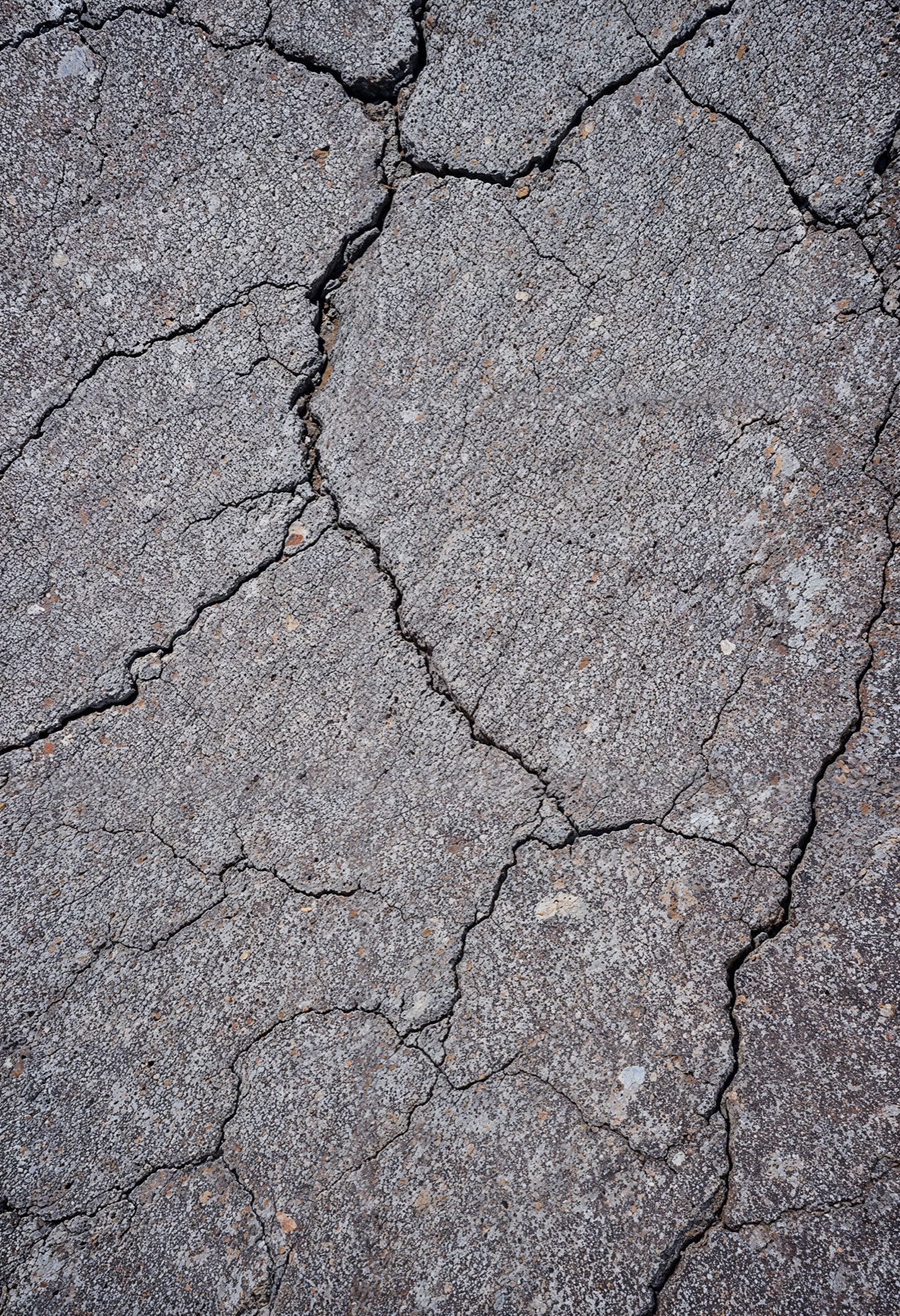
All milled asphalt (RAP) is transported to a licensed asphalt plant and recycled into new hot-mix asphalt. RAP is a valuable recycled material — asphalt plants can use up to 30–50% RAP in new mix without sacrificing performance. This makes asphalt the most recycled material in the United States by volume.
None of the milled material goes to landfill. Recycling the RAP also reduces the cost of new asphalt production, which indirectly benefits the project economics.
Not always. Milling is needed when: adding another overlay layer would raise the finished grade above the garage floor threshold, drainage corrections (cross-slope adjustment) are required, or the surface has significant rutting that needs to be addressed before the new overlay. If your driveway has never been overlaid before and doesn't have grade conflicts at the garage or street, a straight overlay (no milling) is usually the cost-effective choice — saving you $1.50–$2.50/sq ft.
We assess elevation conflicts at the free estimate visit and recommend accordingly.
The milled surface is rough and dusty but can support foot traffic immediately. Vehicle traffic on the milled surface is generally fine for passenger cars but not recommended for extended periods without the overlay in place — the rough texture wears tires and the loose aggregate can be tracked off the surface. We typically schedule the overlay for the day after milling so the milled surface is only uncovered for 12–24 hours.
For parking lots, phased milling and paving keeps portions of the lot accessible during the project.
Asphalt cold milling in Loudoun County runs $1.50–$2.50 per square foot for standard 1.5"–2" mill depth, and $2.00–$3.50 per square foot for deep milling at 3"–4". Residential driveway milling (800–1,500 sq ft) typically costs $1,200–$3,750 including RAP hauling. Small commercial parking lots (up to 10,000 sq ft) run $15,000–$35,000 for the milling operation.
When milling and overlay are done together as a single mill-and-overlay project, the combined cost runs $3.50–$6.00 per square foot, which is more economical than contracting them separately due to shared mobilization. Grade correction surcharges may apply if significant cross-slope correction is required beyond the standard milling pass.
There is no minimum mill depth requirement for overlay bonding — even a ½" surface scratch provides a mechanical bond surface superior to an unscratched but sealed surface. The mill depth is determined by: the overlay thickness needed (typically 1.5"–2" of SM-9.5A), the finished grade constraint (garage floor clearance, drain inlet elevation, ADA ramp grade), and whether grade correction is needed. For a standard driveway or parking lot mill-and-overlay, 1.5"–2" of milling removes the oxidized, cracked surface layer and provides a clean mechanical bond surface for the new overlay.
The critical factor is not the mill depth itself but the cleanliness of the milled surface — compressed air blowdown and SS-1h tack coat ensure the new overlay bonds to the milled base regardless of mill depth.