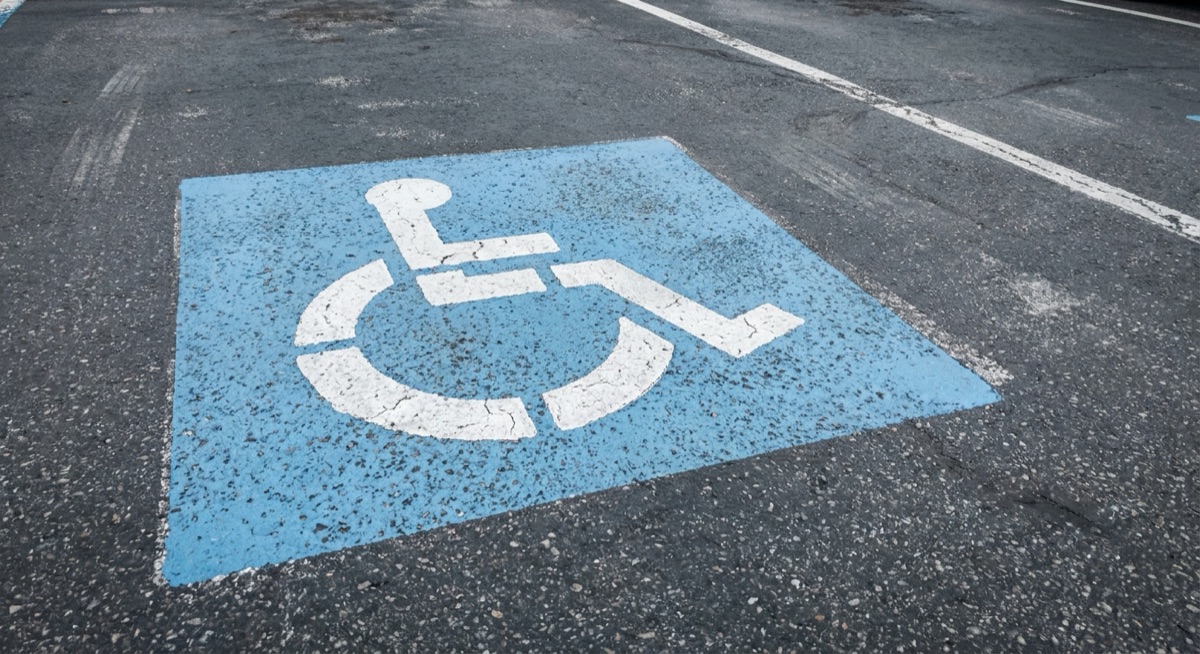
Leesburg Asphalt stripes parking lots for businesses, HOAs, churches, retail centers, and property managers throughout Loudoun County, VA. We apply new striping on freshly paved lots and re-striping on existing lots using professional airless line-striping equipment that delivers crisp, uniform 4" lines — not hand-rolling or roller-on-a-stick jobs that go on thick and fade fast. We lay out ADA-compliant accessible stall configurations, fire lane markings, directional arrows, and curb markings to meet Virginia and ADA requirements.
Parking lot striping cost in Leesburg typically runs $500–$2,500 for most commercial lots, depending on lot size and marking complexity. Re-striping a 20-stall lot takes 2–4 hours. Free layout planning and estimates throughout Loudoun County.
Leesburg Asphalt stripes parking lots throughout Loudoun County, VA using professional airless spray equipment and ADA-compliant layouts — accurate dimensions, crisp lines, same-week scheduling.
For newly paved lots, we create an optimized stall layout that maximizes parking capacity within the available square footage while meeting all ADA and local requirements. We present the layout plan before striping begins so you can confirm stall count, traffic flow, and fire lane locations. Striping is applied at 24–48 hours after paving when the asphalt has fully cured and the surface temperature allows paint adhesion.
For existing lots with faded lines, we re-stripe over the existing layout or adjust the layout to add stalls, reconfigure traffic flow, or update to current ADA dimensions. Old stall lines can be blacked out with a compatible sealer before new lines go down if a layout change is needed. Re-striping is also done after sealcoating — the new sealcoat covers old stripes and the lot needs a fresh stripe within 24–72 hours after sealer cures.
ADA parking requirements have changed significantly since 2010. Many older lots in Loudoun County don't meet current accessible stall count requirements (1 van-accessible + standard accessible stalls per 25 total stalls, up to certain limits), stall dimension requirements, or access aisle widths. We audit your current lot against ADA 2010 Standards and ANSI A117.1, mark deficiencies, and re-stripe to bring the lot into compliance — reducing liability exposure.
Virginia and Loudoun County fire codes require fire lanes to be clearly marked with yellow paint and "NO PARKING — FIRE LANE" stenciling at regular intervals. We install fire lane markings, curb markings, stop bars, crosswalk markings, and directional arrows using professional stencils. Fire lane marking dimensions follow NFPA 1 and Virginia Statewide Fire Prevention Code requirements — accurate dimensions that pass fire marshal inspections.
Faded parking lot lines aren't just a cosmetic issue — they create liability, ADA non-compliance, and traffic flow problems. Here are the signs your lot needs attention now.
When stall lines are difficult for drivers to see in low-light conditions or when wet, the lot has reached the functional failure threshold for striping visibility. Properly applied traffic paint maintains retroreflectivity — the property that makes lines visible to headlights at night — for 2–3 years on an unsealed surface. Once reflective microspheres are worn from the paint film, the lines appear dull even in daytime.
Nighttime and rainy-day visibility are the first to go.
Sealcoating covers existing parking lot lines completely — the new sealer layer is opaque black and obliterates all markings beneath it. Re-striping after sealcoating is not optional; it's required for the lot to function. The correct sequence is: sealcoat, allow 24–72 hours cure depending on temperature, then re-stripe.
Many property owners coordinate sealcoating and re-striping as a single contract with Leesburg Asphalt to ensure the timing is correct and one contractor is accountable for both the sealer and the stripe quality.
If your lot was last striped before 2012 and hasn't been updated since, the accessible stalls almost certainly don't meet ADA 2010 Standards for Accessible Design dimensions. The most common violations are: van-accessible stall width (must be 11' wide with 5' access aisle or 8' wide with 8' access aisle), total accessible stall count (1 per 25 stalls), and missing or non-compliant ISA symbol placement. DOJ and HUD complaints about ADA parking non-compliance have increased in Loudoun County as more commercial properties have undergone inspection during renovation permits.
Loudoun County code enforcement and fire marshal inspectors issue citations for parking in fire lanes — but only when fire lanes are clearly marked. If fire lane markings have faded to the point where the "NO PARKING FIRE LANE" stenciling is illegible or the yellow paint is mostly gone, illegally parked vehicles in fire lanes are both a safety problem and a liability issue in the event of delayed fire apparatus access. Fire lane markings on a commercial lot should be clearly visible year-round and refreshed every 2–3 years or whenever sealcoating is done.
Tenant turnover, change in property use, or a new business owner often brings different parking volume needs, new drive-through configurations, or different fire lane requirements. When the existing layout no longer matches the property's use, re-striping with a new layout plan is needed. We provide a stall maximization analysis — assessing whether the existing layout is using the lot efficiently and whether reconfiguration could add 10–20% more stalls in the same footprint.
A freshly paved or resurfaced parking lot has no markings. Re-striping must wait until the new asphalt has cured sufficiently for paint adhesion — typically 24–48 hours after the final roller pass, longer in cool weather. Attempting to stripe too soon results in paint that doesn't bond properly and fades within months.
Most commercial paving projects include striping in the same contract — Leesburg Asphalt returns to stripe at the correct cure time, confirmed by surface temperature measurement, not just elapsed time.
We measure the lot and design a stall layout that maximizes count while meeting ADA requirements for accessible stalls (1 per 25 stalls for up to 100 stalls, per ADA 2010 Standards). If you're changing the layout from the existing configuration, we prepare a marked site plan for your approval before the crew arrives. Layout planning takes 30–60 minutes on-site, with the plan delivered within 24 hours.
Lot is blown clean of debris before striping. If the existing layout is changing and old stall lines need to be removed, we apply a black-out coat of compatible sealer over old lines before new lines are applied. This prevents old lines from showing through new paint within 1–2 seasons.
Old lines that align with the new layout can be striped over directly without black-out.
Airless sprayer applies standard white or yellow traffic paint at the correct film thickness — approximately 15 mils wet. Stall lines are 4" wide minimum, 18–20 feet long for standard 90° stalls. ADA stall lines, ISA symbols, and access aisle hash marks are applied using precision stencils.
Typical 30-stall lot is striped in 2–3 hours. Large lots with complex markings may take a full day.
Water-based traffic paint is dry to traffic within 30–60 minutes in warm, dry conditions. We cone off sections as they dry and reopen them progressively — most lots are fully reopened within 2 hours of the last stripe going down. We provide a completion walkthrough photo set documenting stall count, ADA stall locations, and fire lane markings for your property records.
ADA 2010 Standards require 1 accessible stall per 25 total stalls (1–25 stalls = 1 accessible). Of every 6 accessible stalls (or fraction of 6), 1 must be van-accessible. The minimum accessible stall count for any lot serving the public is 1 stall.
Lots over 100 stalls use a sliding scale. If your lot was striped before 2010, it likely doesn't meet current van-accessible stall requirements and may need an update.
Standard accessible stalls must be at least 8 feet wide with a 5-foot access aisle. Van-accessible stalls must be 8 feet wide with an 8-foot access aisle (or 11 feet wide with a 5-foot access aisle). The access aisle must be at the same level as the stall, no step between them.
Maximum cross slope 1:48 (2.08%). Access aisles can be shared between adjacent accessible stalls — two stalls sharing one 5-foot aisle each counts as standard accessible.
Virginia Statewide Fire Prevention Code (SFPC) and Loudoun County fire ordinances require fire lanes to be a minimum of 20 feet wide (26 feet where aerial apparatus access is required), clearly marked with yellow paint and "NO PARKING — FIRE LANE" stenciling. Stenciling is required every 50 feet per NFPA 1. Violations result in towing and fines issued by Loudoun County code enforcement.
Fire lanes must be kept clear at all times — which is only practical when they're clearly visible.
Loudoun County's commercial growth along the Route 7 and Route 28 corridors has produced a high concentration of parking lots that were built in the 1995–2015 era and have received inconsistent maintenance since. Many of these lots were striped to the ADA Standards that were in effect at the time of construction — which were updated significantly by the 2010 ADA Standards for Accessible Design (effective March 2012 for new construction and alterations). Property owners who haven't audited their accessible stall layout since the early 2000s often have lots that are non-compliant with current van-accessible stall dimensions, stall count requirements, or access aisle configurations.
The risk isn't theoretical: DOJ complaints about inaccessible parking are one of the most common ADA enforcement actions against small commercial property owners in Northern Virginia. Leesburg Asphalt audits accessible stall configurations as part of every re-striping estimate and includes ADA-compliant dimensions in all work, at no additional charge for the compliance review.
The HOA segment of the Loudoun County striping market is particularly active in master-planned communities including South Riding, Broadlands, Lansdowne, and Brambleton — communities with shared parking areas at community centers, amenity facilities, and neighborhood parks. These HOA lots are subject to the same ADA requirements as commercial lots but are often overlooked in annual maintenance budgets because the community perceives them as recreational rather than commercial. Loudoun County Sheriff code enforcement patrols community lots for fire lane and accessible parking violations just as aggressively as commercial strips.
Leesburg Asphalt provides HOA-specific striping quotes that include a compliance checklist for the board, making it easy for the board to document due diligence in its meeting minutes and protect the community from DOJ complaint exposure.

Most commercial lots in Loudoun County need re-striping every 2–4 years. UV exposure, traffic, and weather fade traffic paint — white lines on a sealcoated lot typically last 2–3 years before they're difficult to see in low light. Re-striping after sealcoating is always required because the new sealcoat covers the existing lines entirely.
Budget re-striping into your regular parking lot maintenance cycle: sealcoat every 3–4 years + re-stripe immediately after.
For most lots, we can phase the striping to keep part of the lot open at all times. We stripe one section, cone it off while it dries (30–60 minutes), then move to the next section. For small lots (under 20 stalls), it's often easier and faster to close the entire lot for 2 hours rather than coordinate phasing.
We work around your business hours when possible — early morning striping (6–8 AM) is popular with retail and restaurant clients to minimize customer impact.
Water-based traffic paint is the standard for parking lot striping — it's cost-effective, fast-drying (open to traffic in 30–60 minutes), and provides 2–4 years of service life on sealed surfaces. Thermoplastic is a heated material that melts and bonds to the pavement surface, providing 7–10 year service life and significantly higher retroreflectivity (nighttime visibility) due to glass beads embedded in the material. Thermoplastic is standard on public roads and is used for fire lanes and accessible stall markings on high-traffic commercial lots where durability justifies the higher cost.
For most Loudoun County commercial lots, quality traffic paint at the correct film thickness provides excellent performance and re-striping cost-effectiveness every 2–3 years.
ADA 2010 Standards Table 208.2 requires: 1 accessible stall for lots of 1–25 total stalls; 2 for 26–50; 3 for 51–75; 4 for 76–100; then 1 per 50 stalls from 101–200. Of every 6 accessible stalls (or fraction thereof), at least 1 must be van-accessible. A single-stall lot needs 1 accessible stall, which must be van-accessible.
Lots that were striped before March 2012 under the 1991 ADA Standards may have non-compliant van-accessible stall dimensions — those standards required only 1 van-accessible stall per lot regardless of total stall count, and the dimensions were different. We check existing stall count and dimensions against the 2010 Standards at every re-striping estimate and flag any deficiencies.